
Nissan Armada 2025-2026 Service and Repair Manual: How to Repair Aluminum Wires
PRECAUTIONS FOR THE HANDLING OF ALUMINUM WIRES
If an aluminum wire is damaged (e.g. broken), never perform the repair method for copper wires (soldering).
Never perform electrotap for connecting broken aluminum wires.
To secure the wire fixing strength (a force to protect aluminum wire from being disconnected from crimp terminal) and electrical conductivity, always use the dedicated harness repair kit and caulking tool [SST: KV99112600] when repairing broken wires.
HOW TO DISTINGUISH ALUMINUM WIRES
Wiring color: Lavender (Color code: LA)
HOW TO REPAIR BROKEN WIRES
Insert heat shrinkable tube
 into the target aluminum wire
  beforehand.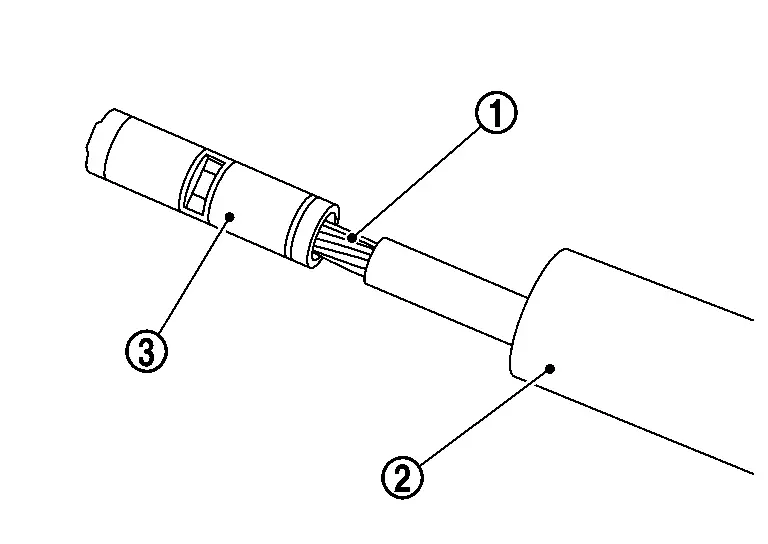
Strip wire terminal approximately 10 mm and insert it into crimp terminal
 .
.CAUTION:
Check wire size and use appropriate crimp terminal.
Set crimp terminal to the die (tooth) of caulking tool [SST: KV99112600].
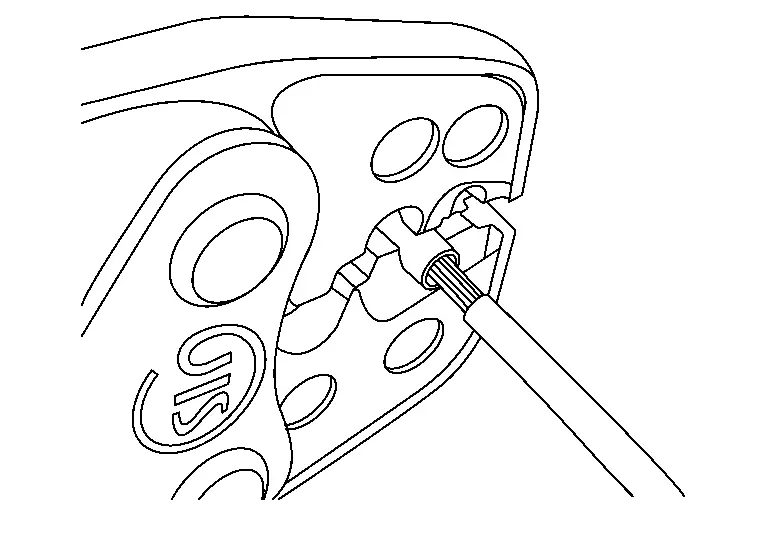
CAUTION:
Use appropriate die (tooth) of caulking tool [SST: KV99112600] according to the crimp terminal size.
Apply load until the handle of caulking tool [SST: KV99112600] is released.
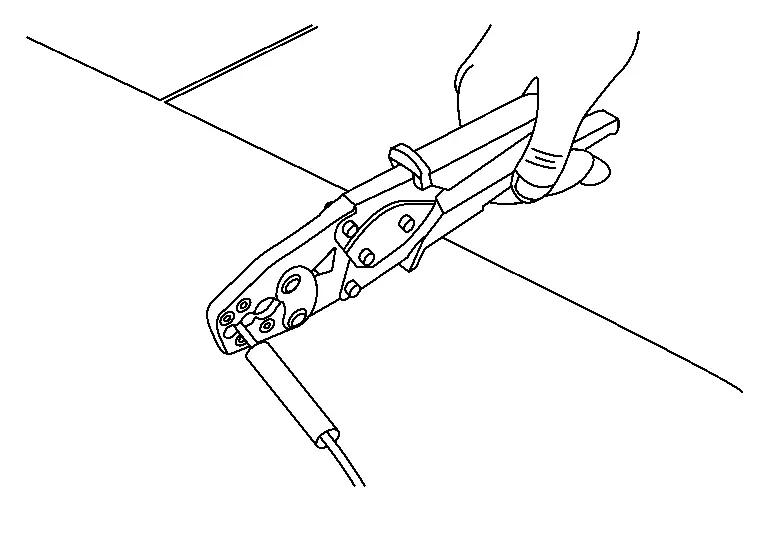
 NOTE:
NOTE:The handle of the specified caulking tool [SST: KV99112600] is not opened until crimping is completed.
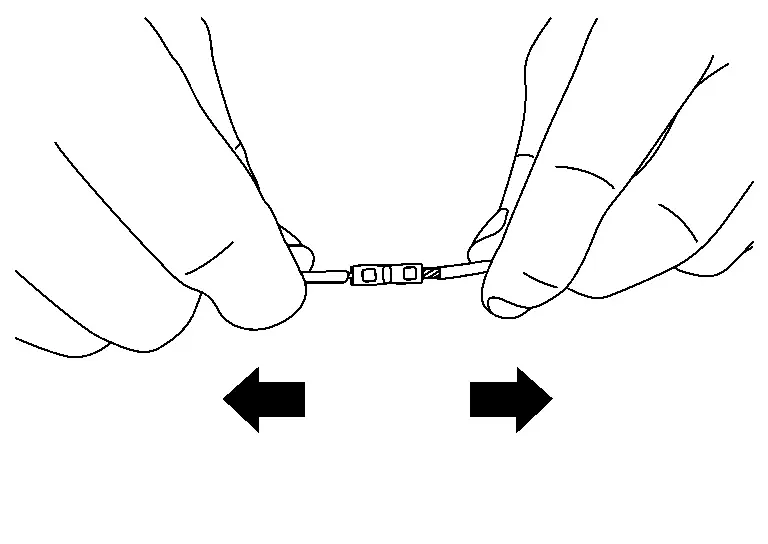
After crimping both sides, pull wire at both ends to check that they are not disconnected from crimp terminals.
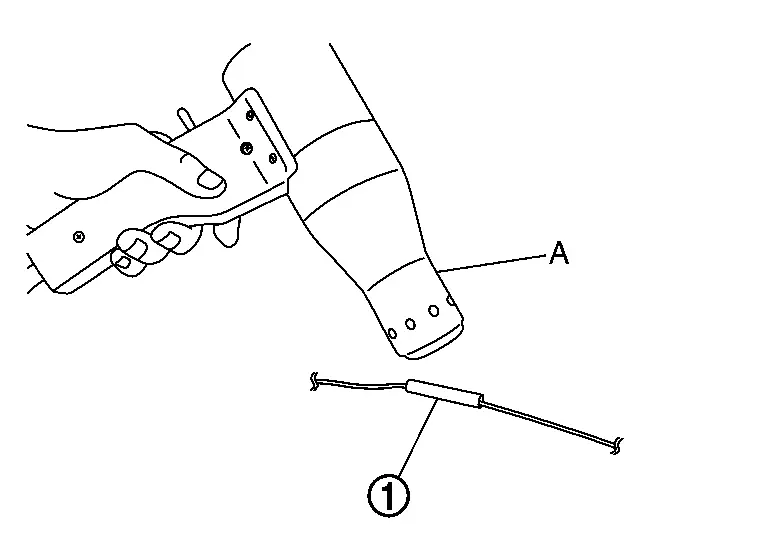
Cover the crimp terminal with heat shrinkable tube
and heat the tube with industrial dryer  .
.
After heating heat shrinkable tube
, check that adhesive is squeezed out from both ends of tube to the entire perimeter.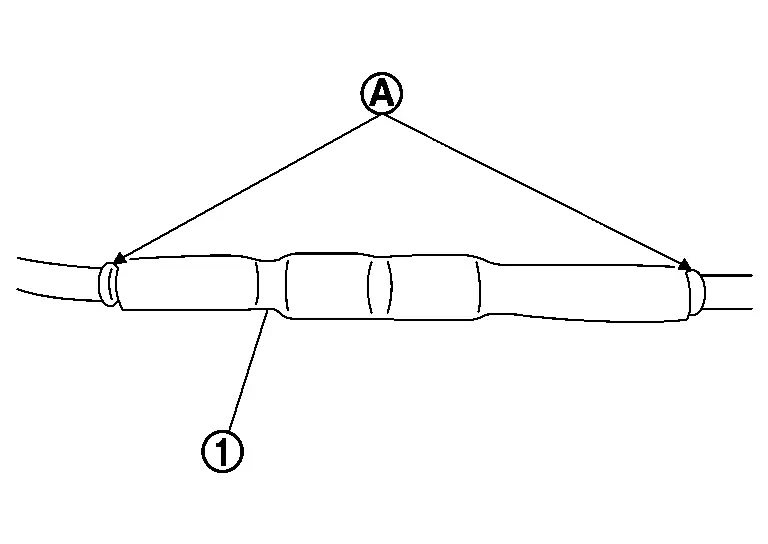
Wind insulating tape
around heat shrinkable tube for the purpose of waterproof and anticorrosion.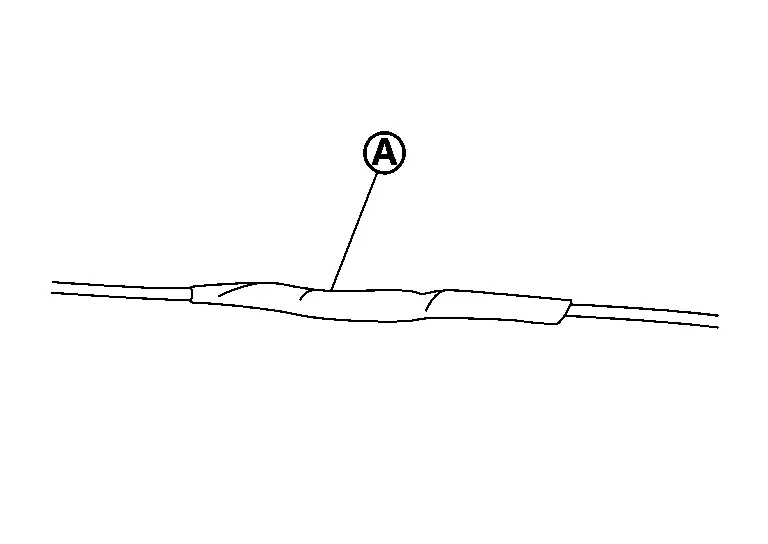
HOW TO EXTEND WIRES
When repairing a broken aluminum wire, it can be extended by connecting aluminum wire with copper wire by using crimp terminal .
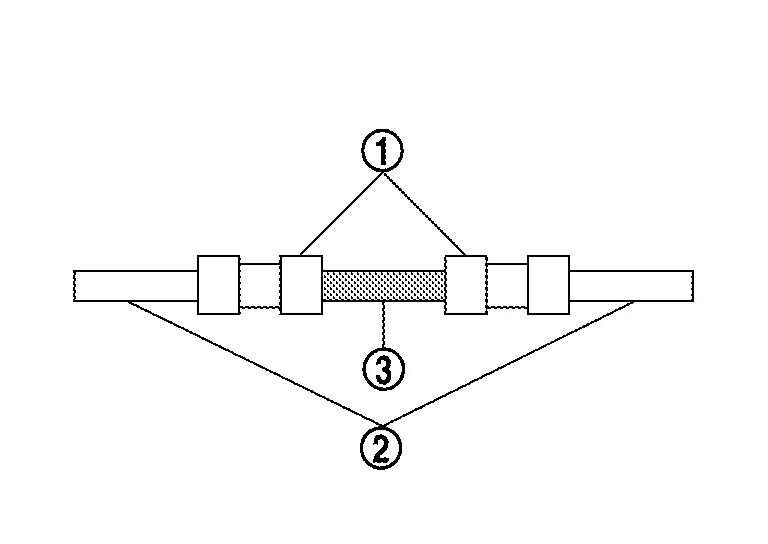
 Connector Symbols
Most of connector symbols in wiring diagrams are shown from the terminal side.
Connector symbols shown from the terminal side are enclosed by a single line and followed by the direction mark.
Connect ...
 Precaution
...
Other materials:
Side Radiator Core Support
WARNING:
: Vehicle front
: Weld the parts onto the back of the component part. Replacement part • Side radiator core support
: Vehicle front
: Weld the parts onto the back of the component part. ...
Steering Column
Item Standard Steering column length*
(maximum telescopic) 600.3 - 604.3 mm (23.63 - 23.79 in) Tilt operating range* 44 mm (1.73 in) Telescopic operating range* 60 mm (2.36 in) Rotating torque 0.2 N·m (0.02 kg-m, 2 in-lb) or less
*: For measuring position, Refer to Inspection. ...
Diagnosis Procedure
CHECK SELF-DIAGNOSTIC RESULTS
With CONSULT
Perform self-diagnosis for “DIFFERENTIAL LOCK�.
Is any malfunction detected by self-diagnosis?
YES>>
Check the malfunctioning system. Refer to DTC Index.
NO>>
GO TO 2.
CHECK DIFFERENTIAL LOCK MODE SWITCH
Perform trouble diagnosis for diffe ...

0.0055