
Nissan Armada 2025-2026 Service and Repair Manual: Repair of Corroded Panel
(1) FILLING WITH FIBERGLASS
(a) Grind off the corroded portion of the panel with an air sander. If corrosion is severe, cut off the affected portion with a chisel or tinman's shears. Remove the paint from the surrounding areas.
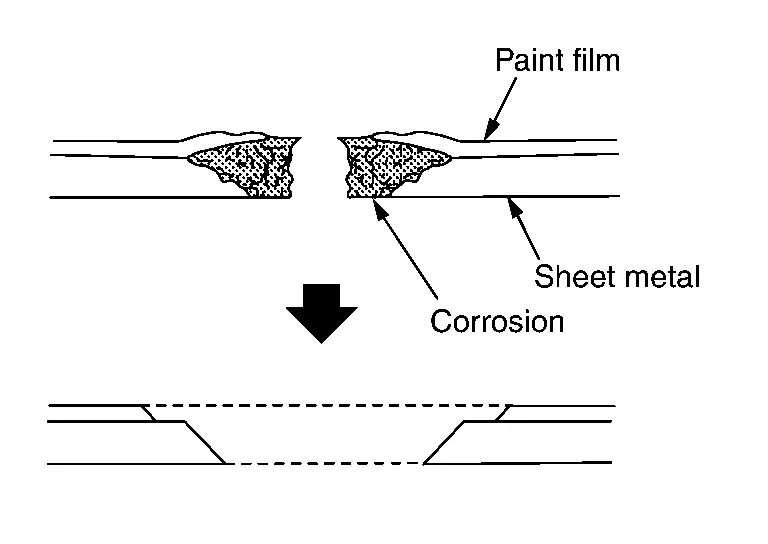
(b) Hollow the area surrounding the repair hole by tapping with a hammer and bending the panel.
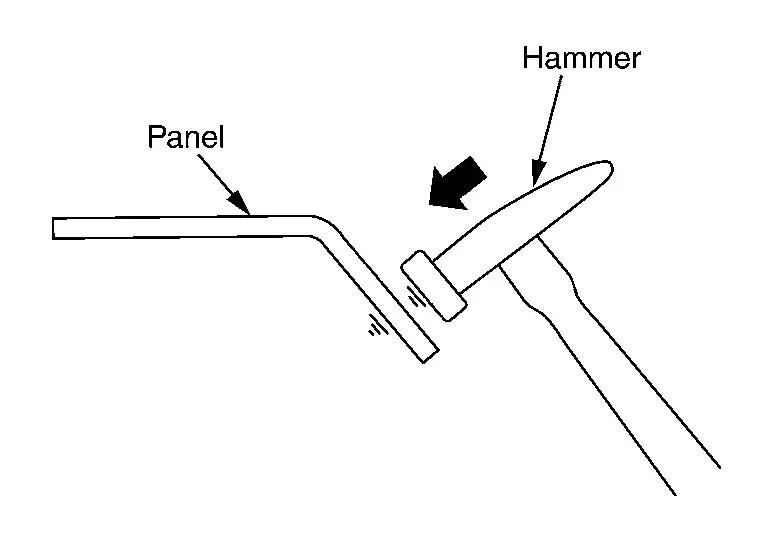
(c) Cut a piece of fiberglass cloth. The cloth should be large enough to overlap the repair hole.
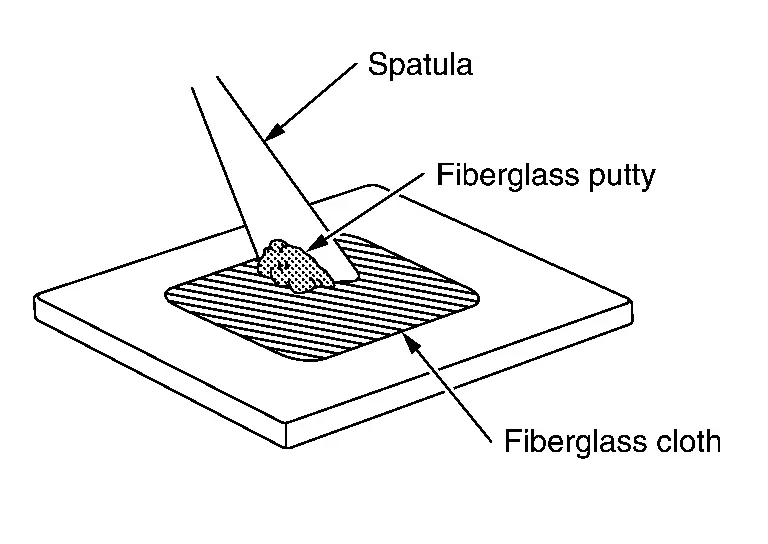
Apply fiberglass putty to the cloth using a spatula until the mesh is filled. Prepare the fiberglass putty by mixing 100 parts of base with 2 to 3 parts of hardener.
(d) Apply a thin coat of fiberglass putty to the panel where the piece of fiberglass cloth is to be attached.
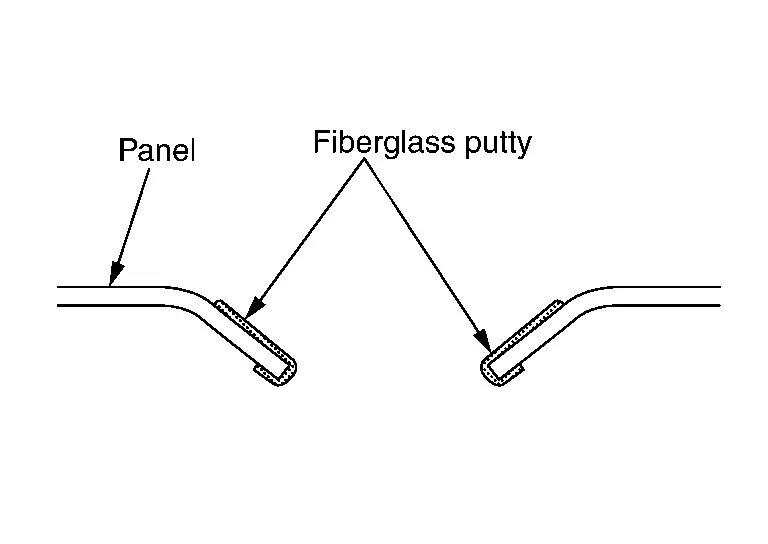
Apply putty also to the edge and back of the repair hole.
(e) Apply the piece of fiberglass cloth to the surrounding portion and the back of the repair hole.
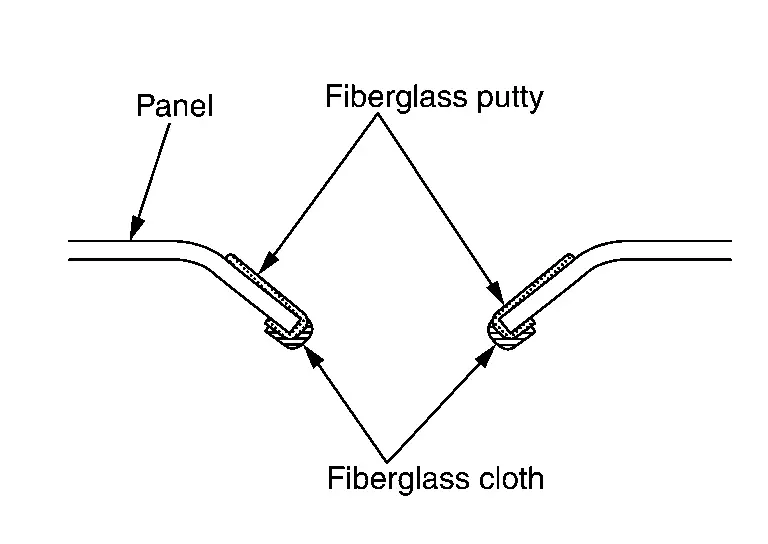
This is necessary to prevent rust.
(f) Apply the piece of fiberglass cloth prepared in step (c) above to the repair hole. Press the periphery of the cloth to the panel for better adhesion. If the repair hole is large and the cloth sags in the center, support the cloth with tape applied behind the panel.
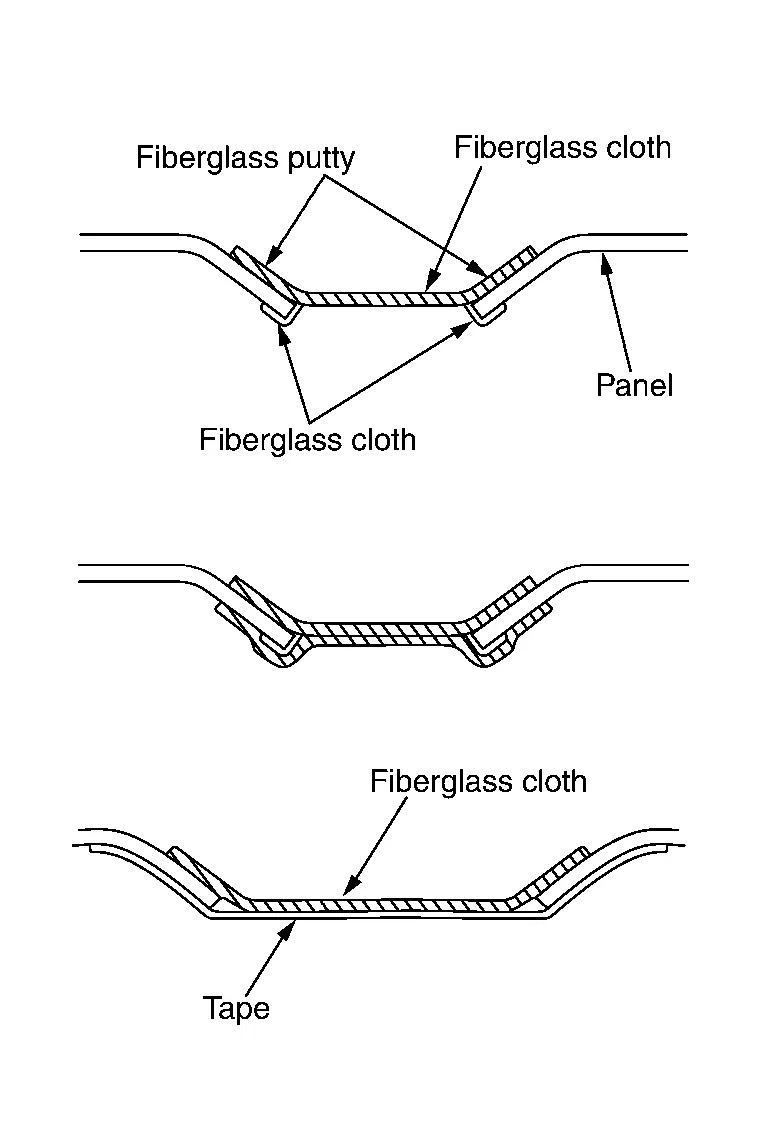
(g) Apply the fiberglass putty to the piece of fiberglass cloth. The fiberglass putty surface should be below the surrounding panel surface. If the area to be repaired is deep, use two or more piece of fiberglass cloth. In such a case, avoid thick application of fiberglass putty. Thick fiberglass putty will crack after drying.
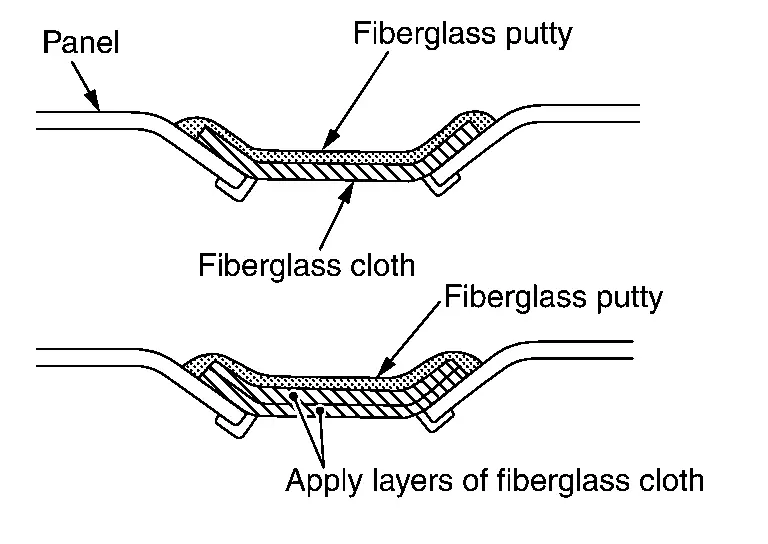
(h) Dry the fiberglass putty, and grind the surface with an air sander. Then trim the entire panel using body filler.
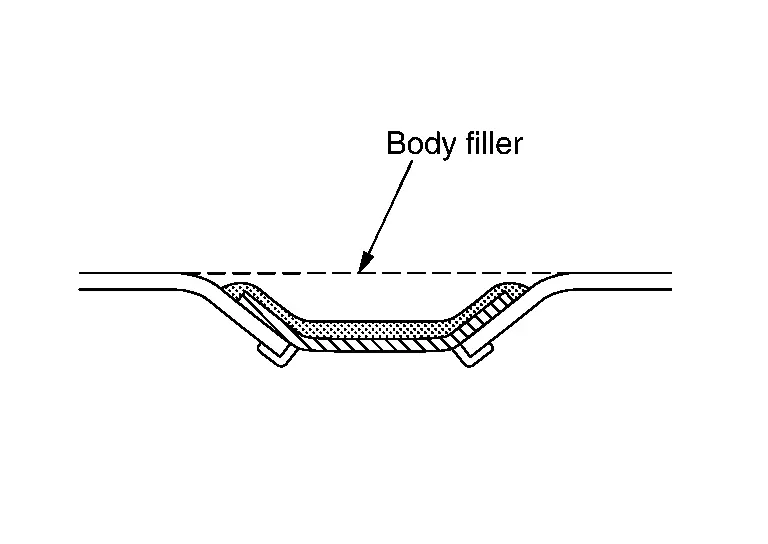
When force drying fiberglass putty, allow the putty to sit for approximately 20 minutes. Then heat at a temperature below 60°C (140°F). Rapid heating which causes the putty to change color must be avoided, as it will lead to cracked putty. Fiberglass putty forms blowholes easily. Body filler must be used to finish the surface of fiberglass putty.
(2) PATCHING
(a) Remove the corroded portion of the panel.
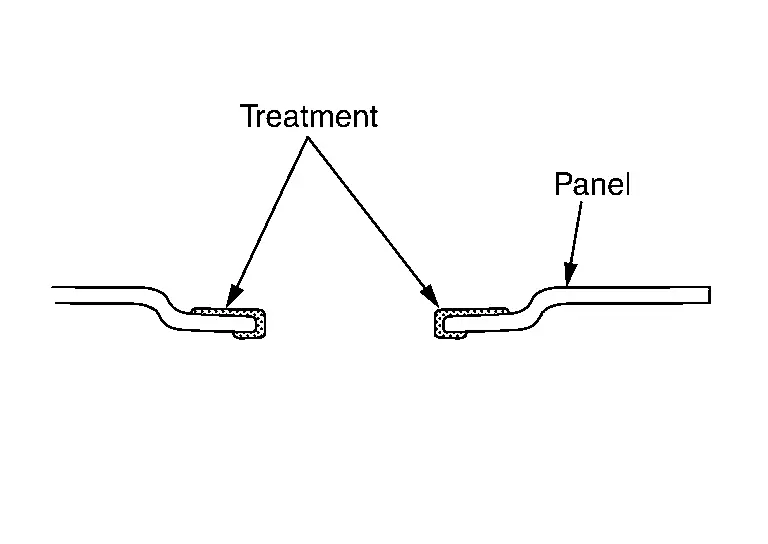
Remove paint from the panel around the repair hole.
Make a flange by bending the surrounding panel with pliers and hammer, then apply anti-corrosive treatment (Metallic solution).
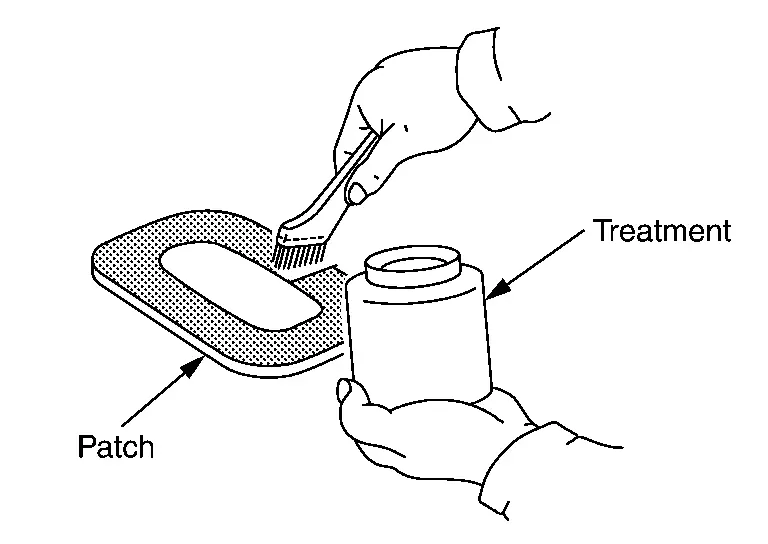
(b) Using tinman's shears, cut a patch large enough to overlap the repair hole. Apply the anti-corrosive treatment to the portion to be welded. Use of stainless steel is recommended to avoid rusting. If the repair hole is large, use a panel having the same thickness as the original panel to retain the original strength.
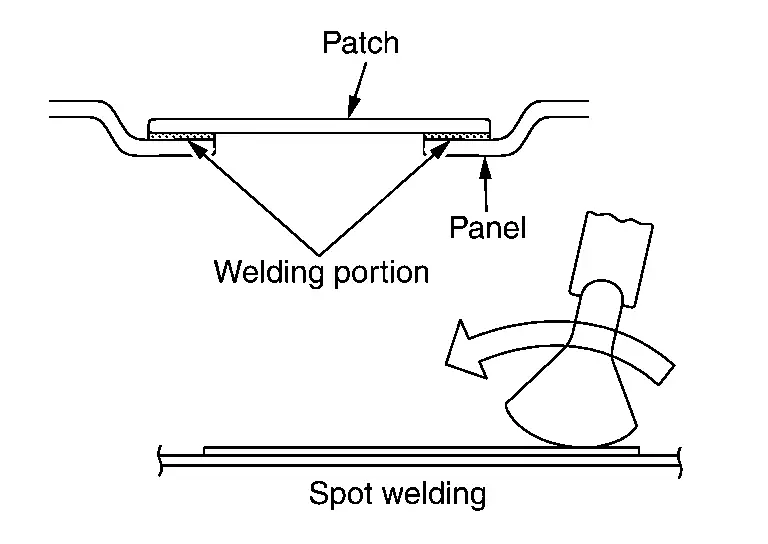
(c) Weld the patch to the repair hole. If stainless steel is used, use the MAG welding or spot welding method.
 NOTE:
NOTE:
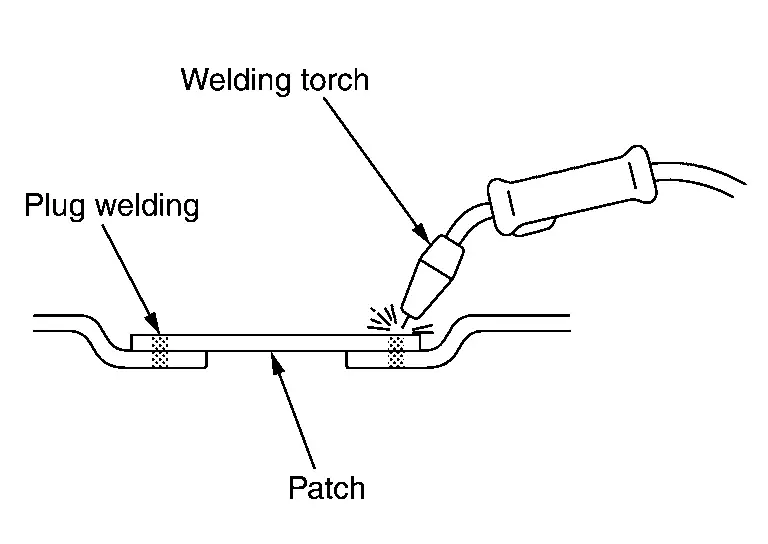
When welding the patch by MAG welding, use the plug welding method.
(d) Apply the body filler to the repaired portion of the panel.
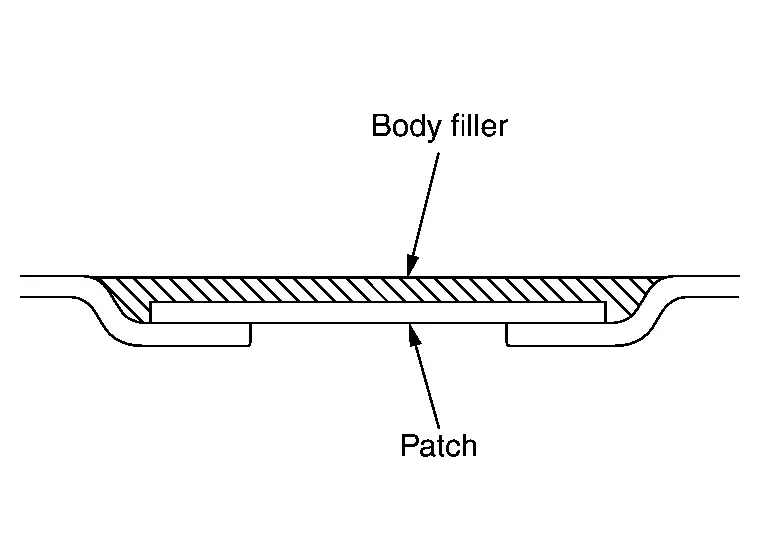
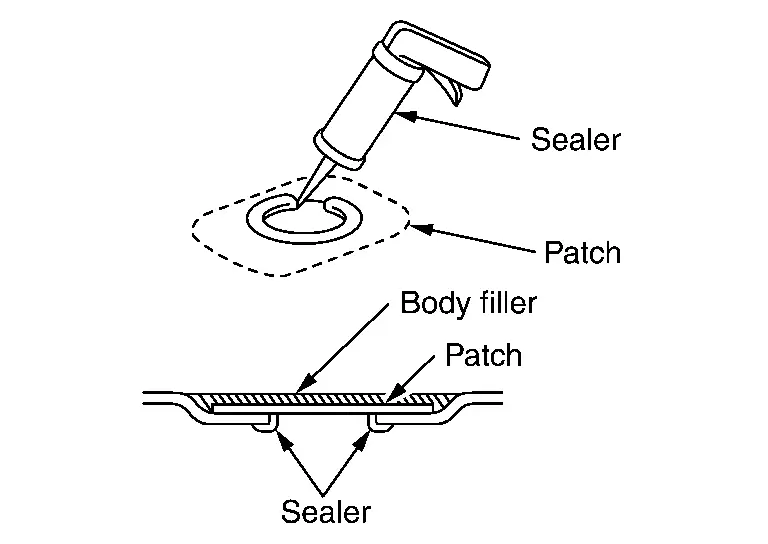
(e) Apply the anti-corrosive treatment to the back of the panel. If accessible from behind, apply a sealer to the panel-to-patch mating section.
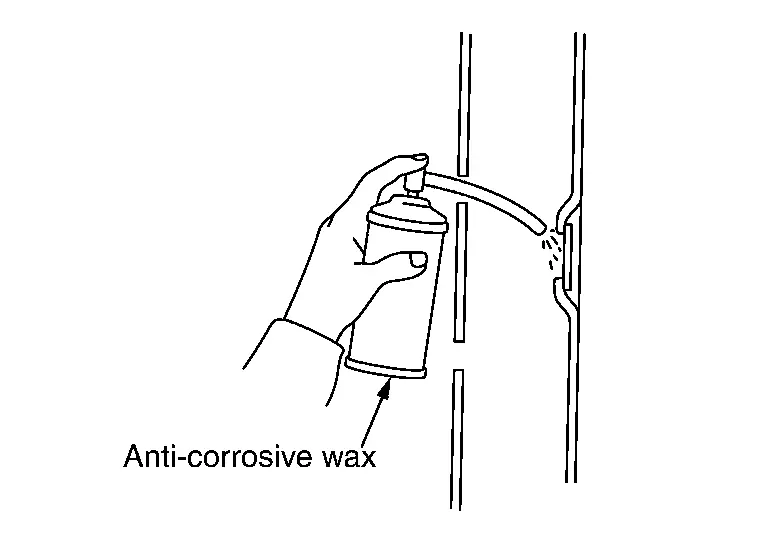
(f) If inaccessible from behind, apply an anti-corrosive wax from an inner panel opening or the like. It is also important to apply the anti-corrosive treatment to other portions in addition to the repaired portion.
 Removal of Rust Limited to the Skin Panel Surface
Grind the rusted portion with an air sander or the like.
Rust may be more extensive than it appears from the outside. Therefore, it is necessary to grind the area around rusted portion. Repair the gr ...
 Frame Repair
...
Other materials:
Diagnosis Procedure
CHECK INTELLIGENT KEY SYSTEM (REMOTE KEYLESS ENTRY FUNCTION)
Press the LOCK button of Intelligent Key.
Are all doors LOCKED?
YES>>
GO TO 2.
NO>>
Check Intelligent Key system (remote keyless entry function). Refer to System Description.
CHECK HAZARD WARNING LAMP FUNCTION
Check hazard wa ...
Diagnosis Procedure
CHECK INTELLIGENT KEY SYSTEM SYMPTOM TABLE
Check Intelligent Key system symptom table.
Refer to Diagnosis Procedure.
>>
GO TO 2.
PERFORM SELF-DIAGNOSIS RESULT
Select “Self Diagnostic Result� mode of “INTELLIGENT KEY�, and check if DTC is detected.
Is DTC detected?
YES>>
Perfor ...
Work Flow
DETAILED FLOW
INTERVIEW FROM THE CUSTOMER
CAUTION:
>>
GO TO 2.
CHECK SYMPTOM
CAUTION:
>>
GO TO 3.
PERFORM SELF-DIAGNOSIS
With CONSULT
Perform self-diagnosis for “CHASSIS CONTROL�.
Is DTC detected?
YES>>
Record or print self-diagnosis results and freeze frame data (FFD). ...

0.0051