A New Direction for Nissan’s Full-Size SUV
The third-generation Nissan Armada Y63 is one of the most substantial reinventions in the model’s history. Nissan changed the powertrain, transmission, cabin, electronics, suspension strategy and off-road offering rather than simply refreshing the previous formula. The result is still unmistakably an Armada: a large, three-row, body-on-frame SUV designed for towing, long-distance travel and family use, but the Y63 feels considerably more modern and more deliberately positioned as Nissan’s flagship SUV.
This review goes beyond a short specification list. It looks at how the major systems work together, what the Armada is like to live with, where PRO-4X changes the character, how towing and 4WD capability translate into everyday use, and which compromises still come with a full-size SUV of this scale.
For factory operating instructions and technical procedures, see the Nissan Armada Y63 Owner’s Manual and the Nissan Armada Y63 Service & Repair Manual.
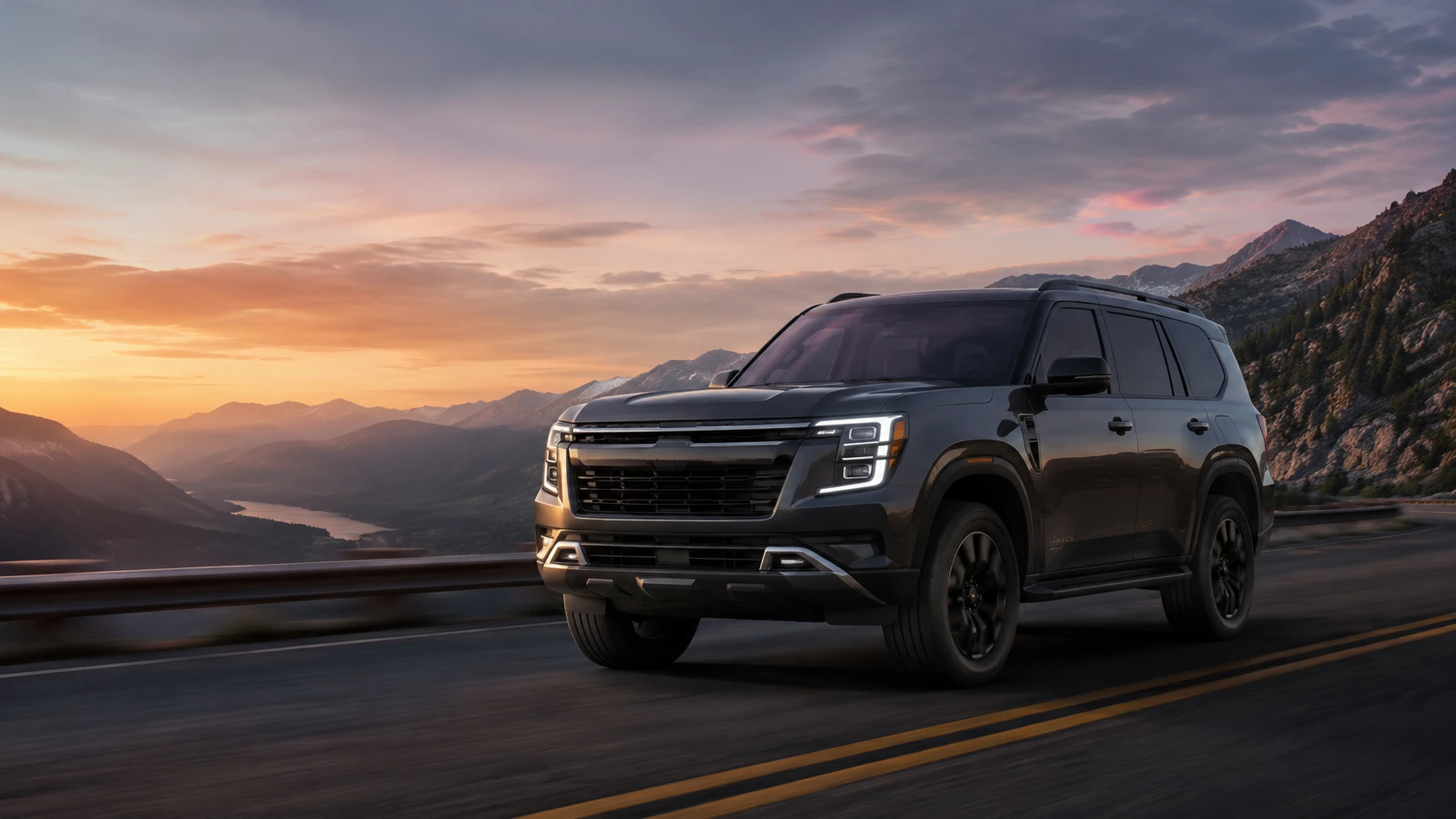
Nissan Armada Y63 Review Score
Excellent all-round full-size SUV
The Armada scores highly because it combines strong standard power, serious towing ability, a much better cabin, useful camera technology and genuine off-road hardware without pushing immediately into luxury-brand pricing. Its biggest penalties are predictable for the class: size, fuel consumption and long-term complexity.
Editorial score based on the vehicle’s current-generation specification, usability and positioning. It is not a manufacturer or safety-test rating.
Review at a Glance
Powertrain
3.5-liter twin-turbocharged V6 with a 9-speed automatic transmission. Standard output is 425 hp and 516 lb-ft of torque.
Towing
Maximum rated towing capacity is up to 8,500 lb when the vehicle is properly equipped and operated within its limits.
Seating
Up to eight occupants with a second-row bench, or seven when configured with second-row captain’s chairs.
Character
A body-on-frame flagship SUV focused on road-trip comfort, towing, family use and meaningful off-road capability.
Best reasons to buy
- Strong 425-hp / 516-lb-ft standard powertrain.
- Useful 8,500-lb maximum towing capability.
- Much more premium and contemporary cabin.
- Excellent camera and driver-assistance technology.
- PRO-4X adds real mechanical capability, not just styling.
Main compromises
- Very large footprint in city driving and parking.
- Fuel consumption remains substantial.
- Advanced suspension and electronics add complexity.
- Some buyers will still miss traditional V8 character.
- Its capabilities can be excessive for light-duty urban use.
Exterior Design: More Modern Without Losing Armada Presence
Full-size SUVs depend heavily on proportion. They need to look substantial without becoming visually clumsy, and the Armada Y63 handles that balance better than the outgoing design. The body is upright and purposeful, the front end is broad, and the relatively vertical glass area preserves the traditional large-SUV stance. At the same time, the lighting, grille treatment and surfacing are much cleaner than before.
The design changes character depending on trim. More road-focused versions lean toward a polished premium look, while PRO-4X uses functional off-road cues such as a more trail-friendly front treatment, tow hooks, underbody protection and darker exterior elements. This is not purely cosmetic differentiation: the off-road-oriented geometry contributes to a more suitable approach angle when the vehicle is used away from pavement.
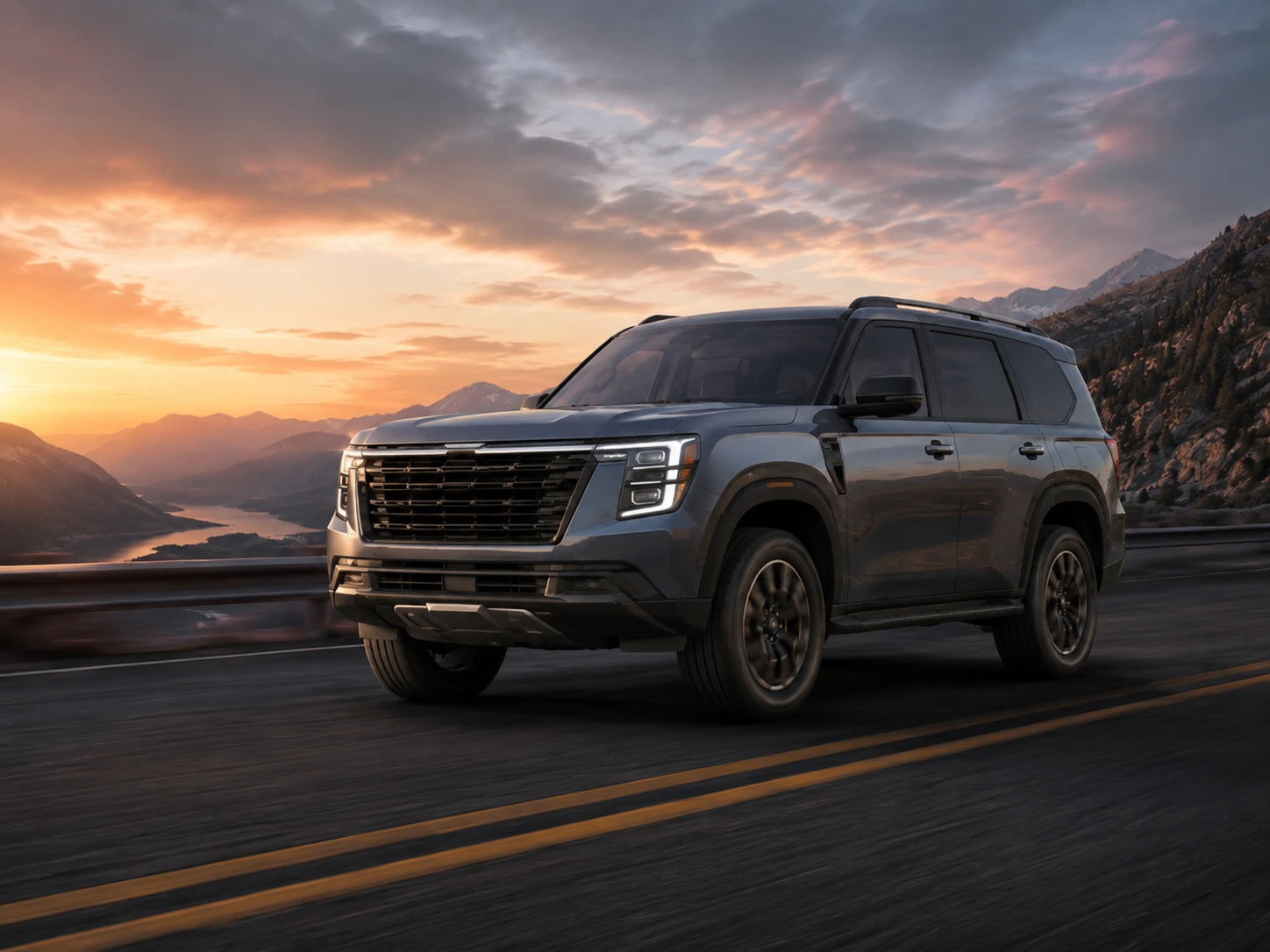
Large, upright and deliberately substantial
The Y63 keeps the imposing full-size SUV shape but adds cleaner detailing and clearer separation between luxury-oriented and off-road trims.
Engine and Performance
From naturally aspirated V8 to twin-turbo V6
One of the biggest changes is under the hood. The Armada Y63 replaces the previous generation’s naturally aspirated V8 with a 3.5-liter twin-turbocharged V6. In standard form Nissan rates it at 425 horsepower and 516 lb-ft of torque. Those numbers matter because the torque delivery suits the way a large SUV is actually used: merging, climbing grades, passing with passengers aboard and pulling a trailer.
The change in engine architecture also changes the personality. A turbocharged V6 does not have the same sound or linear response as a traditional large-displacement V8, so buyers who specifically value V8 character may miss that aspect. In return, the newer engine brings stronger quoted output and works with a more modern transmission strategy.
Nine-speed automatic transmission
The 9-speed automatic is an important part of the Y63’s improvement. More ratios allow the drivetrain to keep the engine closer to its useful operating range while providing taller gearing for steady-speed cruising. In practical terms, the combination feels better suited to highway acceleration, changing road grades and towing than an older large SUV with fewer ratios.
Paddle shifters are available for situations where the driver wants more direct gear control. Most owners will leave the transmission in automatic mode, but manual selection can be useful when descending long grades, towing or preparing for a pass.
Acceleration and real-world response
A vehicle this large is not designed to behave like a sport crossover, but the new engine provides enough reserve that normal traffic does not expose the Armada’s weight as dramatically as the dimensions suggest. The strongest impression is not outright speed; it is effortlessness. There is meaningful torque available without needing to rev the engine aggressively.
Ride Quality and On-Road Comfort
A full-size body-on-frame SUV can never completely hide its mass, but suspension tuning determines whether that mass feels controlled or cumbersome. The Y63 places much more emphasis on refinement. On a good highway surface, the appeal is obvious: high seating position, long wheelbase, substantial body structure and a cabin designed around long-distance comfort.
The trade-off appears in tight streets, narrow parking structures and quick directional changes. No camera system or steering calibration can make a large three-row SUV physically small. Drivers moving up from a midsize crossover will need time to adjust to the width, turning space and amount of vehicle extending beyond the driver’s seating position.
Adaptive Electronic Air Suspension
Available Adaptive Electronic Air Suspension is one of the features that helps premium versions of the Armada feel more sophisticated. The system can alter vehicle height and contribute to ride and load management. It also adds complexity compared with a conventional fixed-height suspension, something long-term owners should consider when thinking about out-of-warranty maintenance.
Steering, Visibility and Maneuvering
Large SUVs live or die by visibility aids. The driver sits high and has a commanding view forward, but body corners can still be difficult to judge. Nissan’s camera technology is therefore more than a showroom luxury on the Armada. Around View Monitor functions can help when parking, approaching curbs, positioning near obstacles or placing the vehicle on a trail.
One of the most useful available features is Invisible Hood View, which uses camera imagery to help the driver understand what is immediately ahead and below the normal line of sight. On-road it can help in tight parking spaces; off-road it becomes more valuable when the hood blocks the view of rocks, ruts or the crest of a steep rise.
Interior Quality and Cabin Design
The cabin is where the generational change is most obvious. Earlier Armada models often felt primarily like durable utility vehicles with luxury equipment added. The Y63 starts from a more premium baseline. The dashboard is broader and more integrated, display technology is more prominent, and upper trims place more emphasis on materials, seat comfort and visual detail.
Importantly, not every frequently used function has been pushed into a screen. For a family SUV, retaining direct access to climate and driving functions matters because the driver may be operating them while moving, towing or managing passengers. The overall layout strikes a better balance between modern displays and everyday usability.
Front seats
The first row is one of the Armada’s strongest areas. The seating position is upright, visibility is commanding and the cabin width gives both front occupants a genuine sense of space. Higher trims add more elaborate adjustment and available massaging front seats.
Second row
Depending on configuration, the second row can use a bench or captain’s chairs. The bench is the logical choice for maximum eight-passenger capacity, while captain’s chairs improve individual comfort and can make third-row access easier.
Third row
The third row is one of the reasons to choose a full-size SUV instead of a two-row luxury model or smaller crossover. It provides genuine family flexibility, although buyers should still consider how often the third row will be occupied and how much cargo space must remain available when all seats are in use.
Infotainment and Connectivity
The Armada Y63 moves decisively into the large-screen era. Depending on grade, available dual 14.3-inch displays create a wide digital surface across the dashboard. Google built-in support on equipped versions integrates navigation and connected functions more directly into the vehicle.
Screen size alone is not enough. Large icons, clear menu grouping and sensible separation between driver information and infotainment matter more in daily use than novelty. For an SUV likely to spend hours on highways with a family aboard, navigation, audio, phone integration and camera access need to work predictably.
Driver Assistance and ProPILOT Assist
Driver-assistance technology is a major part of the current Armada’s character. Depending on configuration, the vehicle can provide advanced lane, speed and highway assistance functions, with ProPILOT Assist 2.1 available on selected versions. These systems can reduce workload during long highway trips, but they do not make the vehicle autonomous and the driver remains responsible for control.
4WD System and Off-Road Capability
More than an appearance package
The Armada Y63 can be configured with Intelligent 4WD and a two-speed transfer case. True low-range capability matters because it separates a serious body-on-frame SUV from many road-oriented three-row crossovers.
The NISSAN All-Mode 4WD information in the owner’s manual is important reading before using the system. It explains operating precautions and mode limitations.
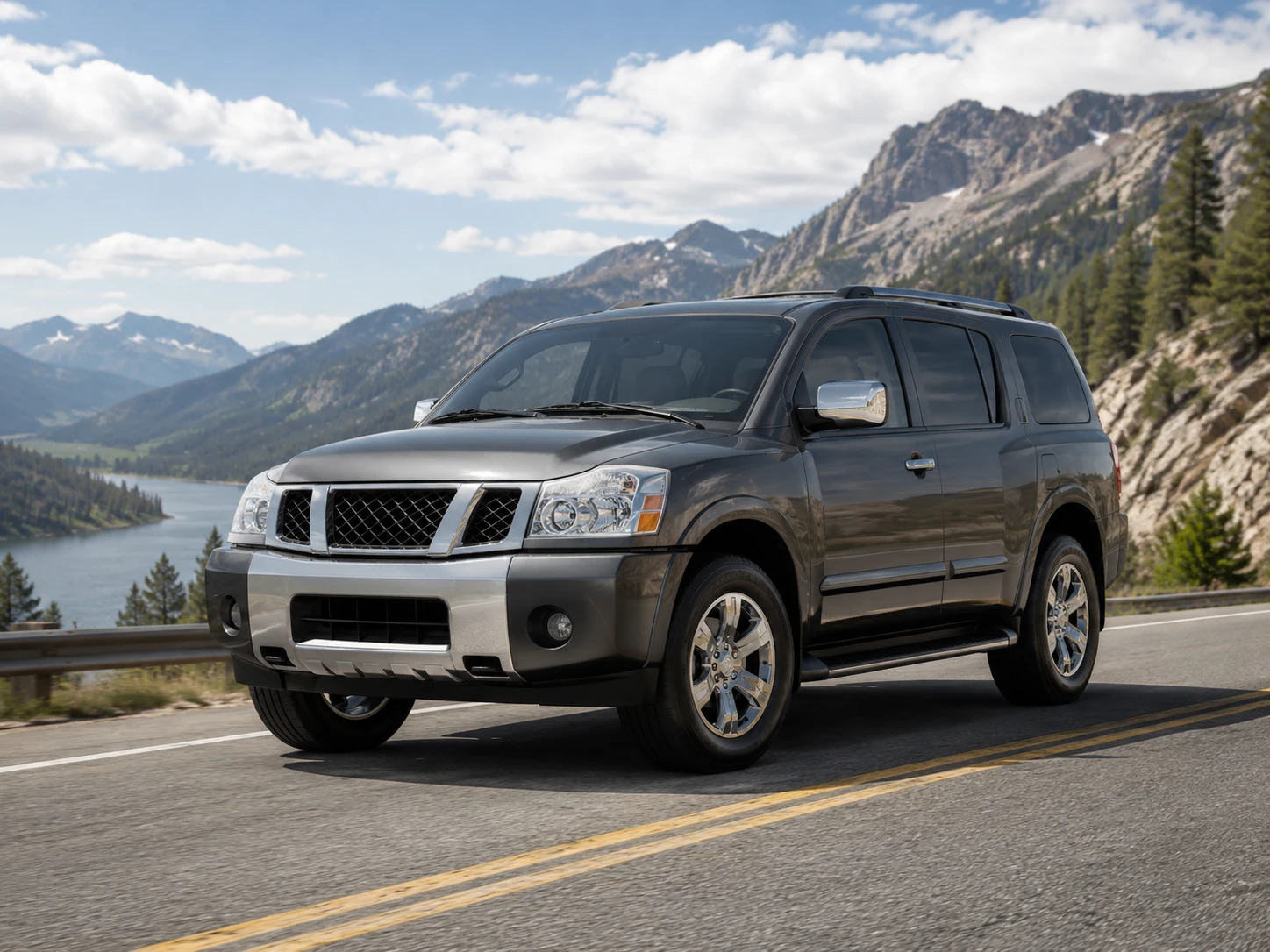
PRO-4X
PRO-4X is the version that most clearly demonstrates Nissan’s intention to make the Armada credible away from pavement. It combines all-terrain tires, underbody protection, an electronic locking rear differential and off-road-focused exterior geometry. The locking rear differential is particularly important because it provides a more direct traction solution when one rear wheel has very little grip.
What the size means off road
Capability does not eliminate physics. The Armada is still long, wide and heavy. Tight wooded trails, narrow ledges and deeply uneven terrain can be challenging simply because of its dimensions. Owners should consider tire sidewalls, running boards, body overhang and accessory weight before assuming every trail suitable for a smaller 4x4 is appropriate for a full-size SUV.
Towing: One of the Armada’s Core Strengths
Nissan rates the Armada for up to 8,500 lb of maximum towing capacity when properly equipped. That places towing near the center of the vehicle’s purpose rather than treating it as an occasional extra. Supporting equipment can include an integrated trailer brake controller, trailer sway control and trailer-related camera or blind-spot functions depending on configuration.
Maximum tow rating should never be treated as permission to attach any trailer below that figure without further calculation. Actual towing safety depends on loaded trailer weight, tongue weight, passengers, luggage, accessories, axle ratings and available payload.
Owners planning to tow should read the Technical and consumer information and the vehicle loading information sections of the owner’s manual.
Why torque matters when towing
The twin-turbo V6’s 516 lb-ft of rated torque is especially relevant with a trailer attached. Maintaining speed on a grade, accelerating into traffic and recovering momentum after slowing for a curve all depend on usable torque. The 9-speed transmission helps by providing more ratio choices.
Practicality for Family Use
The Armada’s biggest practical advantage is simple: space. A family can carry adults, children, luggage and travel gear without immediately running into the packaging compromises common in midsize three-row SUVs. The cabin is broad, the second row is genuinely useful and the third row gives the vehicle real multi-passenger flexibility.
Large exterior dimensions create their own practical costs. Garage length and width should be checked before purchase, and owners who regularly use older city parking structures should consider turning radius and roof clearance.
Cargo and Loading
Cargo flexibility is one of the main reasons buyers choose a full-size SUV. With all rows in use, luggage planning still matters, but folding the third row creates a much larger load floor. Folding additional seating turns the Armada into a useful hauler for bulky household items, sports equipment or travel gear.
Fuel Economy and Range
Fuel economy is not the reason to buy a full-size body-on-frame SUV. Consumption varies with drivetrain, wheel and tire configuration, speed, weather, terrain, trailer use and driving style. The more useful question is whether the fuel use is justified by the vehicle’s actual mission: carrying people, towing, long-distance travel or true 4WD use.
PRO-4X vs. Luxury-Oriented Trims
Choose PRO-4X if...
- You regularly travel on rough, loose or uneven surfaces.
- You want an electronic locking rear differential.
- Approach angle and underbody protection matter to you.
- You prefer a more purposeful off-road appearance.
- You expect to use low-range 4WD rather than simply wanting AWD-style security.
Choose a road/luxury trim if...
- Most driving is on pavement and highways.
- Cabin luxury and comfort features are the priority.
- You want a quieter, more formal appearance.
- Off-road bumper geometry and all-terrain tires add little value to your use case.
- Your priorities are mainly family travel and towing on maintained roads.
Maintenance and Service Considerations
A technologically advanced full-size SUV brings more maintenance considerations than a simpler older vehicle. The twin-turbo engine, 9-speed transmission, available electronic air suspension, multiple cameras, radar-based driver assistance and networked control modules all require correct procedures when serviced.
Modern repairs are often not complete when a component has simply been bolted into place. Sensors may require initialization, camera systems may need calibration, control modules can store diagnostic trouble codes and battery disconnection can require specific procedures.
NIARMADA includes factory information such as the engine oil service procedure and the 9-speed automatic transmission fluid procedure.
Long-Distance Travel
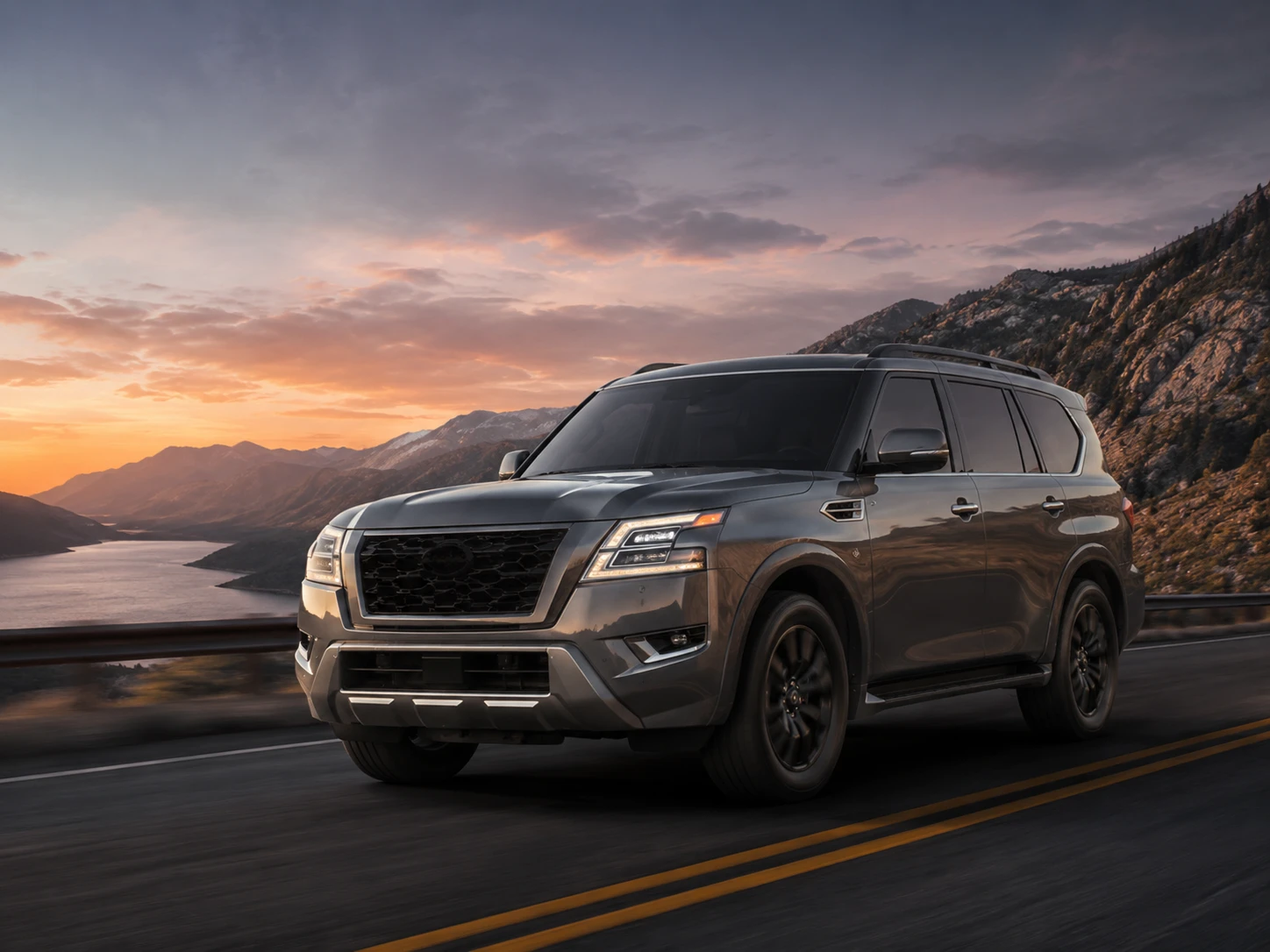
Where the Armada makes the most sense
Its strongest case is not a short solo commute. It is a long trip with people, luggage, changing weather and perhaps a trailer behind it.
The Armada’s strengths become easiest to justify on long journeys. The cabin gives occupants room to spread out, the powertrain has the reserve needed for highway passing, and available assistance systems can reduce driver fatigue. Large fuel use and physical size matter less on an open highway than they do in dense urban traffic.
Safety and Driver Awareness
The Armada combines a modern safety structure with a broad suite of driver-assistance technologies. Exact equipment varies by trim and configuration, so buyers should confirm the vehicle they are actually considering rather than assuming every feature is standard.
What We Like
- Strong powertrain: 425 hp and 516 lb-ft provide substantial reserve for a vehicle of this size.
- Serious towing ability: up to 8,500 lb gives the SUV genuine trailer utility.
- True three-row usefulness: the cabin makes more sense for regular passenger use than many smaller three-row crossovers.
- Useful off-road hardware: PRO-4X adds meaningful capability rather than being only an appearance package.
- Improved technology: large displays, camera views and available ProPILOT Assist move the Armada closer to premium rivals.
- Strong value: equipment and standard output compare favorably with several key competitors.
What Could Be Better
- Physical size: awkward in narrow urban environments and older parking garages.
- Fuel consumption: this remains a large, heavy body-on-frame SUV.
- Complexity: advanced suspension and electronics can make out-of-warranty repair more involved.
- No traditional V8 character: some buyers may prefer the sound and response of the previous engine.
- Capability can exceed actual need: drivers who never tow, carry many passengers or leave pavement may be buying more vehicle than they need.
Who Should Buy the Nissan Armada Y63?
The Armada is a strong match for a family that genuinely uses the strengths of a full-size SUV: carrying several passengers, making long road trips, towing, traveling in poor weather or needing true 4WD capability. It also makes sense for buyers who want a large premium-feeling SUV but prefer Nissan’s value proposition to traditional luxury-brand pricing.
PRO-4X is particularly interesting for owners who camp, tow into unimproved areas, travel on forest roads or want additional traction hardware. Buyers who primarily value quiet highway travel and cabin equipment may prefer a more luxury-oriented trim.
Who Should Look at Something Smaller?
A midsize crossover is a better fit if most trips involve one or two people, towing is rare, parking space is limited and fuel cost is a major priority. The Armada’s advantages come from capacity and capability. If those benefits remain unused, its disadvantages become much harder to justify.
Owner Resources and Manuals
- Nissan Armada Y63 Owner’s Manual
- Nissan Armada Y63 Service & Repair Manual
- Towing, loading and technical information
- NISSAN All-Mode 4WD operating information
- Engine oil service information
- 9-speed automatic transmission fluid service information
Final Verdict
The Nissan Armada Y63 is a much more complete flagship than a simple update of the previous SUV. Its biggest improvements are not isolated features but the way the pieces work together: a stronger twin-turbo powertrain, a 9-speed transmission, more sophisticated suspension technology, a contemporary cabin, useful camera systems and a genuine PRO-4X derivative.
It remains a specialized vehicle. The Armada is large, heavy and not inexpensive to fuel or maintain compared with a midsize crossover. But those drawbacks are closely tied to the capabilities buyers come to this class to obtain. If you need three usable rows, strong towing capacity, real 4WD hardware and the comfort to cover long distances with a full load of passengers, the Y63 makes a convincing case.
Final score: 92/100. Its strongest areas are technology, 4WD capability, powertrain performance and value. The main deductions come from size, fuel use and the complexity inherent in a modern full-size flagship SUV.