
Nissan Armada 2025-2026 Service and Repair Manual: Basic Repair Procedure
(1) WHEN PLASTIC DEFORMATION OCCURS AT THE CENTER OF THE DAMAGED PORTION
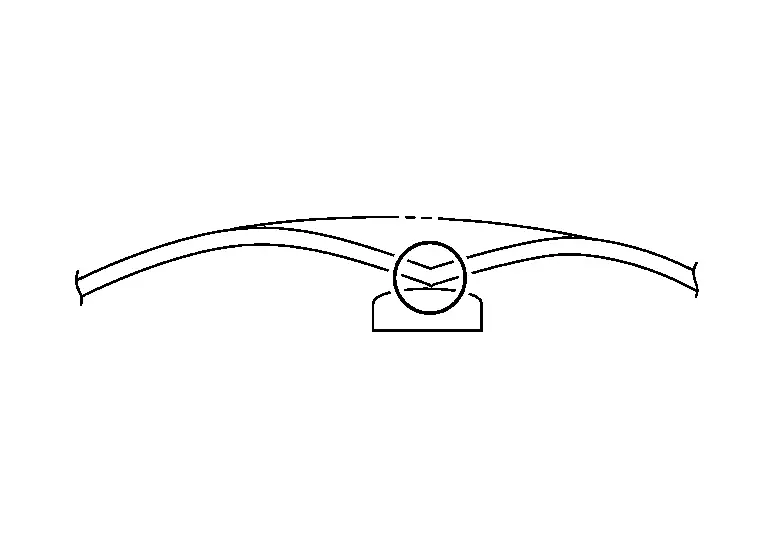
(a) Using a hammer or dolly, strike the lowest portion of the dent from behind until it becomes flat.
(b) Using the hammer-off-dolly method as shown in the figure, raise the concave portion and lower the convex portion.
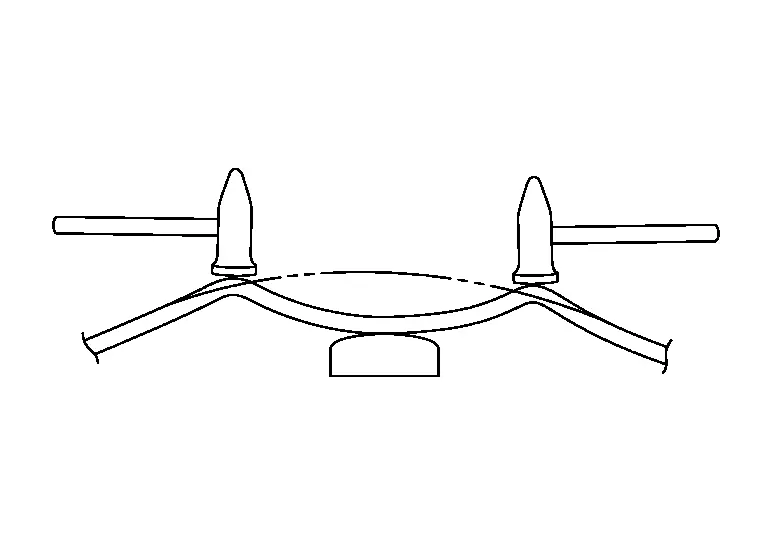
Then smooth the surface a little lower than the original. Using a wooden hammer and dolly, correct the irregularities in the panel.
(c) Existence of plastic deformation can be determined by the stretched panel. The original surface can be restored by shrinking that portion with a gas welding torch.
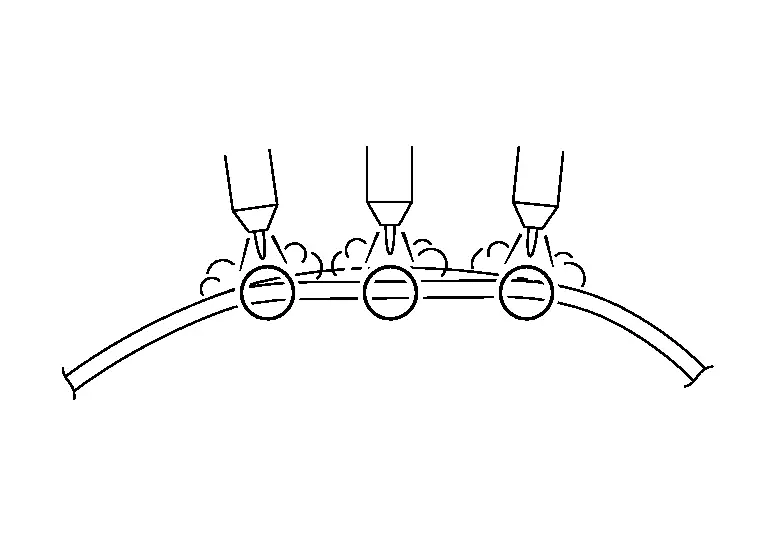
(d) Use a hammer and dolly by the hammer-on-dolly method. Stretch the panel while striking the outer area of the damaged portion. The entire panel surface should be formed somewhat higher than the original surface. Note that, in this case, the stretched portion of the panel must not be hit with the hammer.
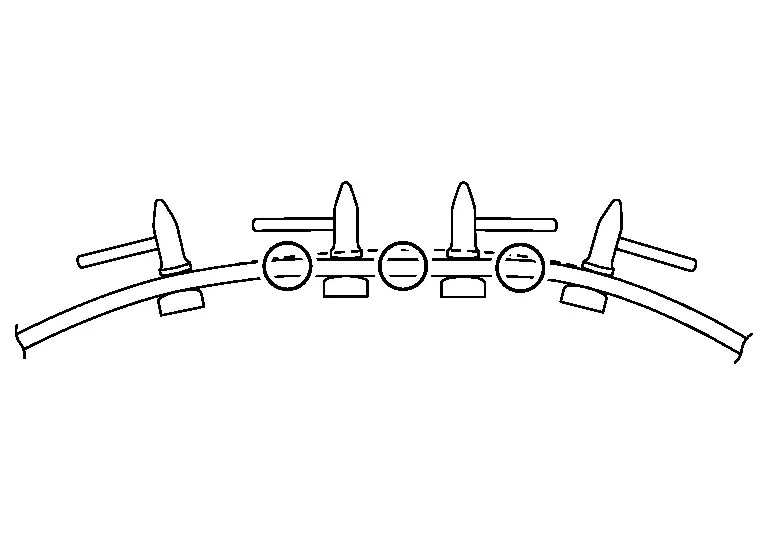
If the concave portion is shallow and if the working face of the wooden hammer matches it, the repair work can be completed quickly by directly shrinking the portion with a gas welding torch.
(2) WHEN PLASTIC DEFORMATION EXISTS AROUND THE DAMAGED PORTION
(a) Apply the dolly to the elastic deformation area behind the panel. Hit the plastic deformation area with a hammer so that the elastic deformation area is lower than the original surface.
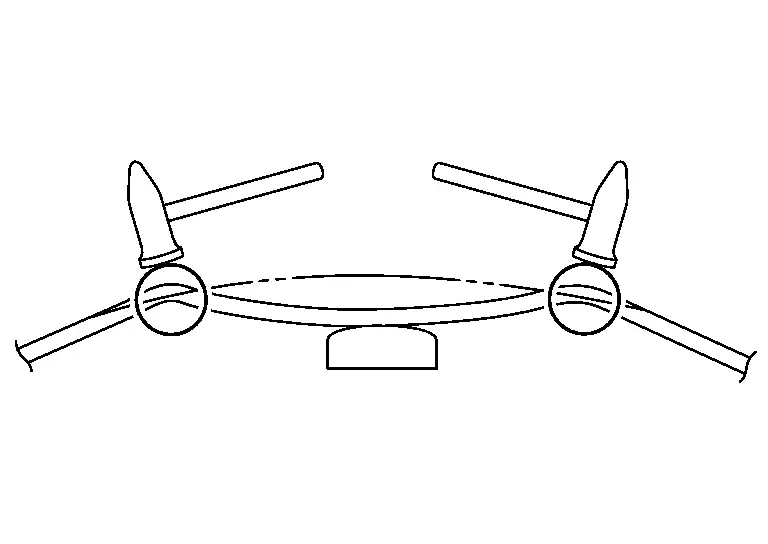
(b) Repair the plastic deformed portion using the hammer-off-dolly method. If a shrinking hammer is available, the stretched portion can be easily shrunk.
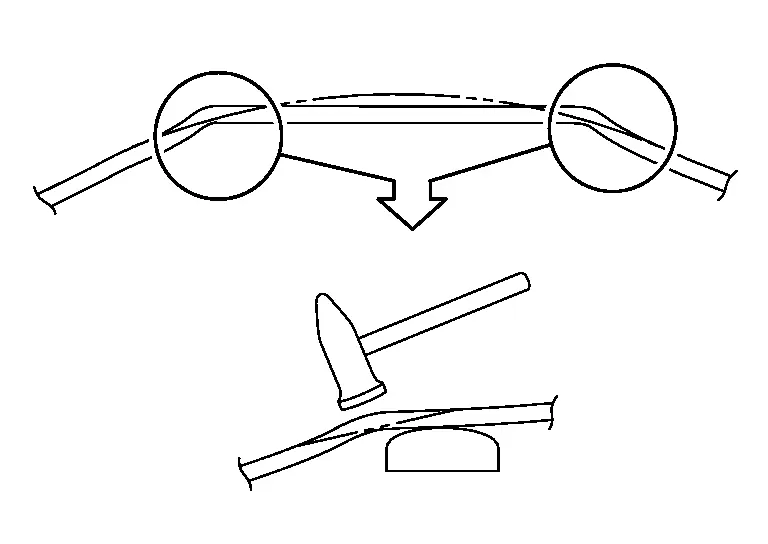
(3) WHEN PLASTIC DEFORMATION EXISTS AT THE CENTER AND AROUND THE DAMAGED PORTION
(a) Using a hammer and dolly, flatten the lowest portion (A) where the plastic deformation exists, so that the flattened surface is not higher than the original surface.
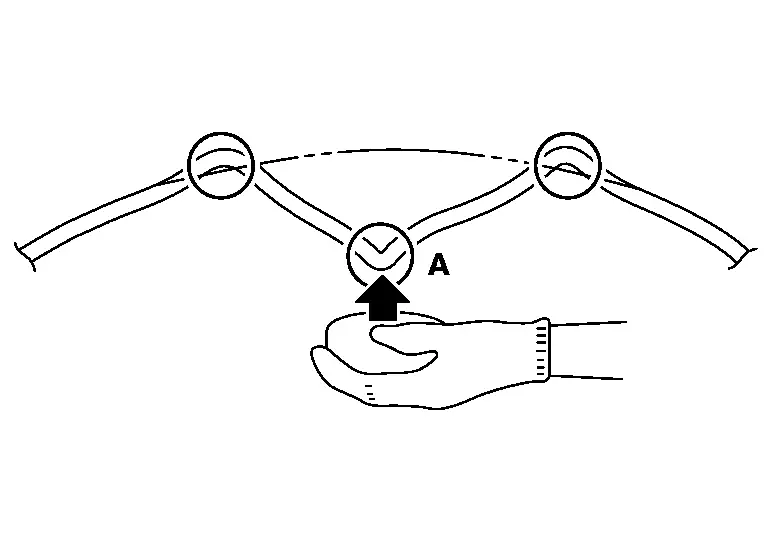
(b) Flatten the highest points (B) where plastic deformation exists.
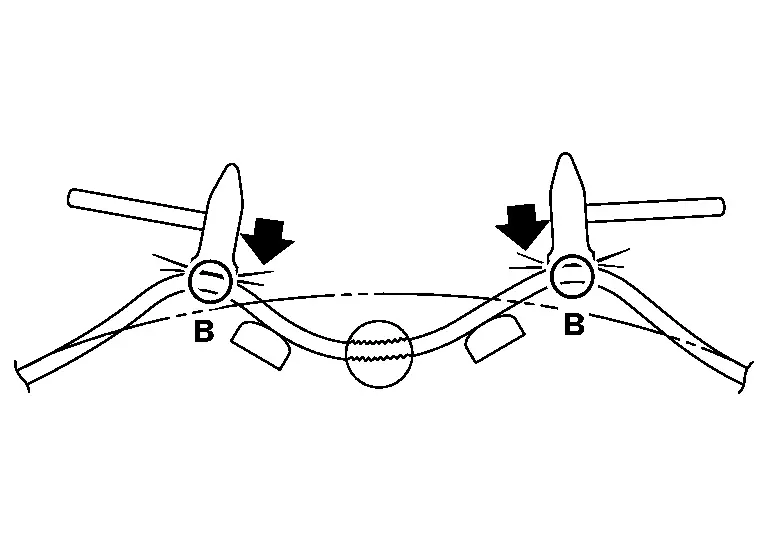
(c) Flatten portion (A) so that the panel surface is not higher than the original surface.
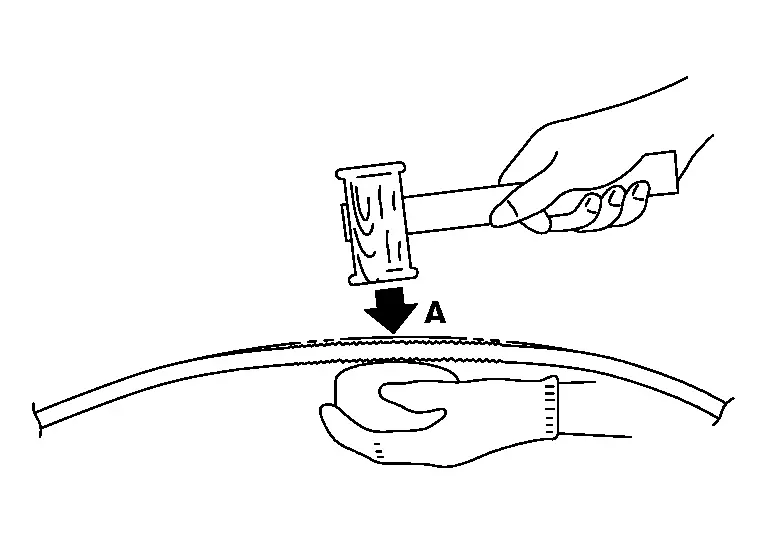
Correct irregularities using a wooden hammer and dolly. If the panel has been stretched, repair by shrinking.
(4) CORRECTING PANEL DISTORTION
(a) Panel distortion occurs when panel damage is repaired. The panel is deformed within the range of elastic deformation. If pressed with a finger, the deformed area bends inward and outward. Panel irregularities occurring over a wide range other than the repaired portion may also indicate panel distortion.
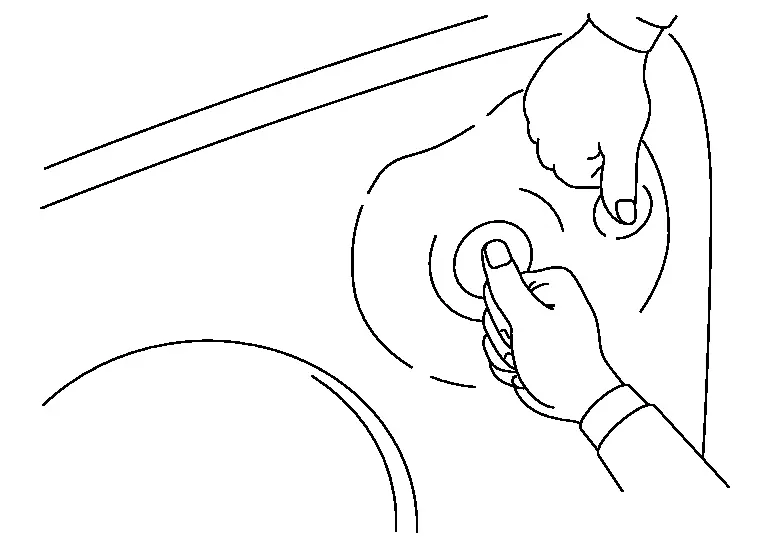
(b) Cause of panel distortion
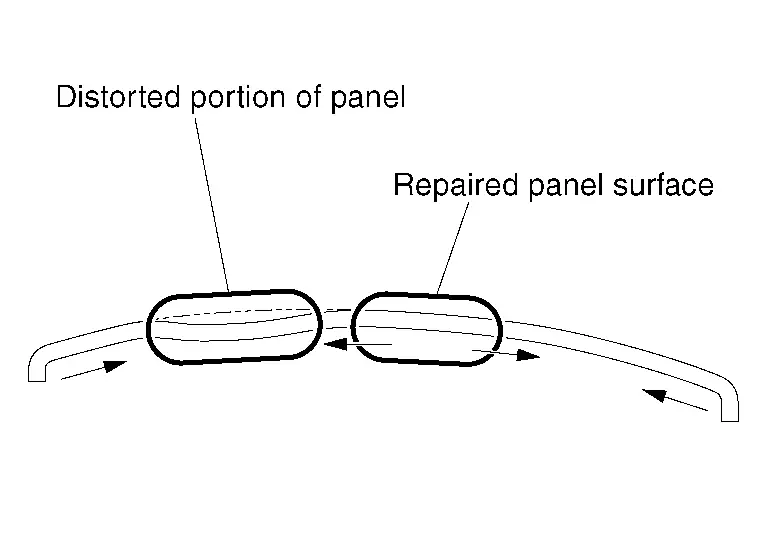
Expansion stress due to damage repair is confined inside the panel because the outer area is bent and work hardened. Thus, it does not allow the panel to expand. The stress is released in the form of panel distortion.
(c) How to correct panel distortion
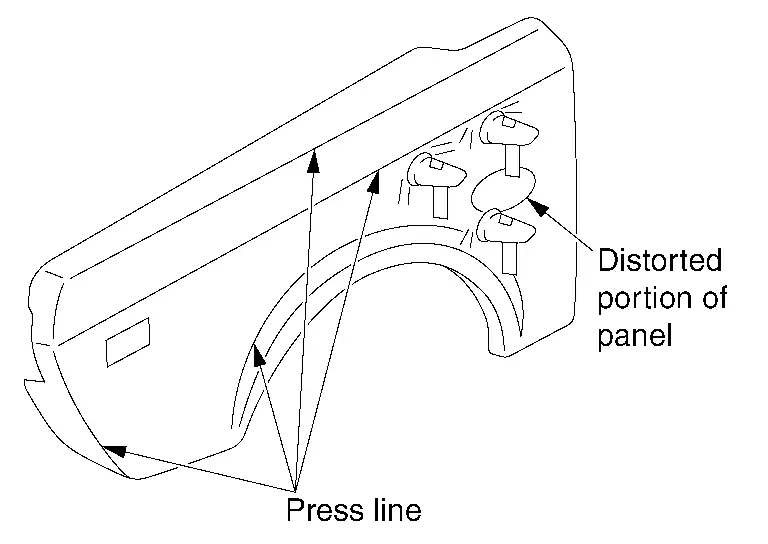
Panel distortion can be removed by shrinking the stretched portion or by stretching the side of the press line using the hammer-on-dolly method.
The front fender repair procedure is explained below:
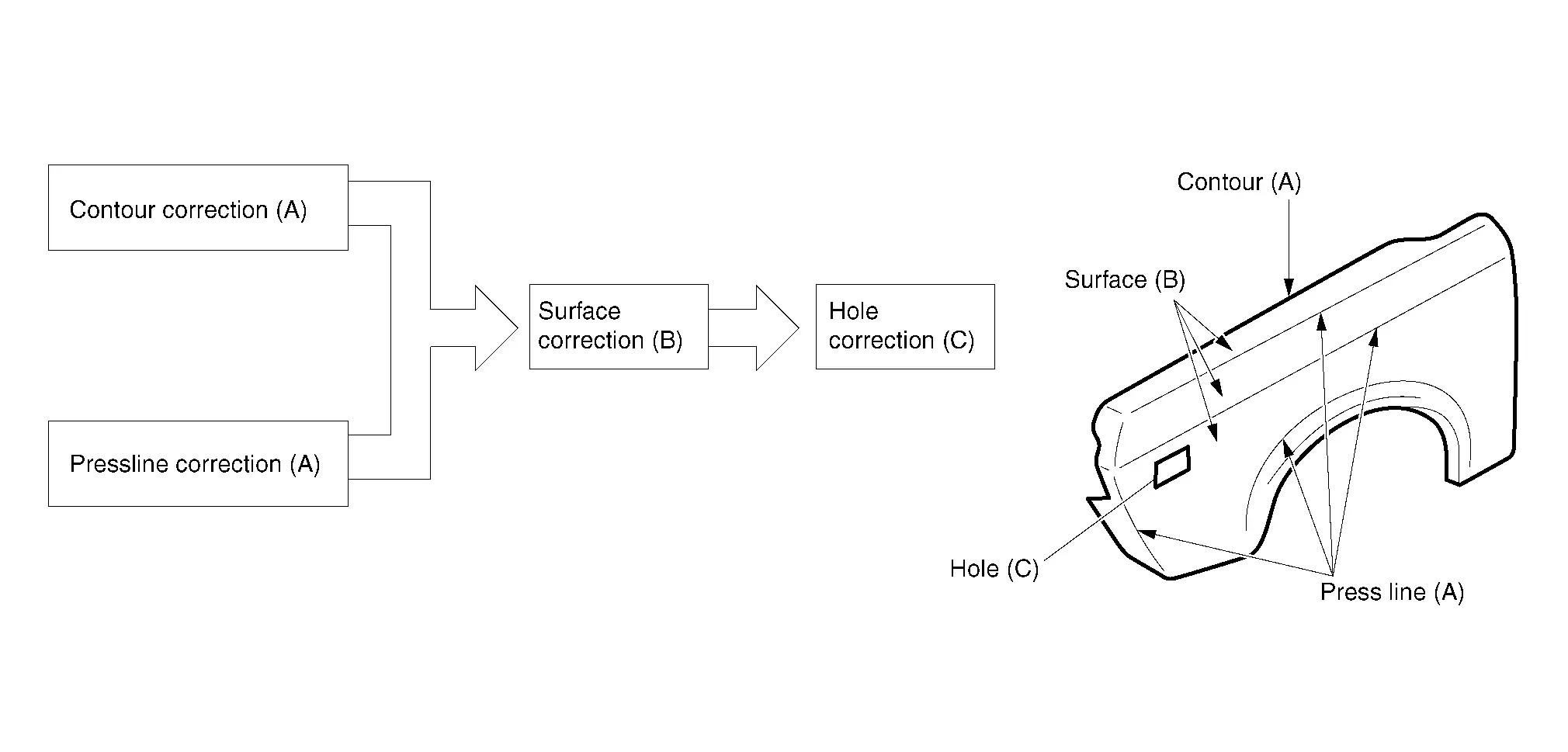
When repairing the body panel, paint and anti-corrosive wax must be thoroughly removed from the damaged area by sanding.
 Elastic VS. Plastic Deformation
Elastic deformation: If pressed, the deformed portion will move or further deform.
Plastic deformation: If pressed, the deformed portion will remain unchanged, and other portions will move.
...
 Paintless Dent Repair
Paintless dent repair is one type of panel repair technique. This technique is used to repair irregularities on painted outer panels without damaging the painted surface. ...
Other materials:
Diagnosis Procedure
CHECK DOOR MIRROR MECHANISM
Check the following items.
Damage, deformation and foreign matter pinching of the door mirror mechanism.
Damage of harness due to rubbing and pinching.
Interference with other components.
Installed incorrectly.
Is the inspection result normal?
YES>>
GO TO 2.
NO> ...
Precautions when Performing Spot Welding
(1) SELECTION OF SPOT WELDING MACHINE
Use the direct welding method whenever possible.
(When direct welding cannot be applied, use MAG plug welding.)
(2) APPLICATION OF ELECTRODE TIPS
Apply electrodes at right angles to the panel. If they are not applied properly, the current density will be low, r ...
Removal & Installation
WARNING:
REMOVAL
Remove front cover. Refer to Removal & Installation.
Remove timing chain. Refer to Removal and Installation.
Remove fuel tube assembly. Refer to Removal and Installation.
Remove high pressure fuel pump. Refer to Removal & Installation.
Remove camshaft sprockets (INT and EXH) ...

0.0055