
Nissan Armada 2025-2026 Service and Repair Manual: Basic Types of Damage
The first thing we look at is the dent. This is also the case when you repair a dent. You always should look at the damage first. The important thing to look at is the center of the dent. The depth of the dent is the important part. It tells you the following:
- Difficulty of the repair
- Time of the repair
- Type of repair method
There are many different aspects to dents but the depth is the most important part. On one side it is the depth and on the other side the sharpness, but in most cases a deep dent is also a sharp dent. Basically there are two types of dents.
Depending on the type of dent you want to repair, consider the following information:
| Sharp Dents | Soft Dents | |
|
| |
| Repair Time: | 2x (twice as much time as soft dents) | x |
| Repair Method: | Levers | PDR, Glue System |
| Technical Experience: | Medium to high | Low to medium |
| Cause of Damage: | Park, medium to big hail | Soft park, small to medium hail |
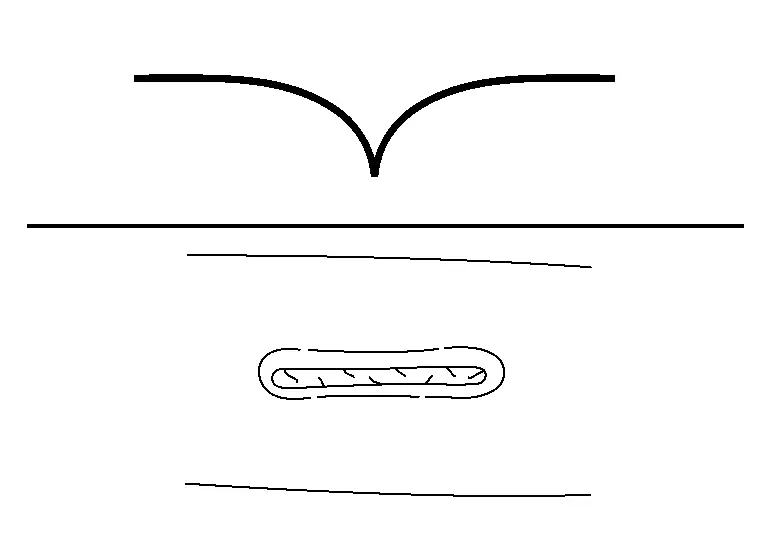
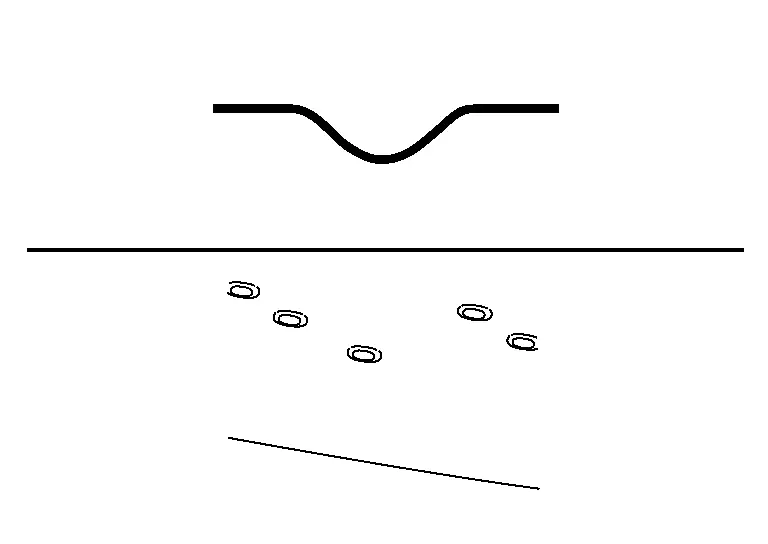
Soft or Shallow Dent
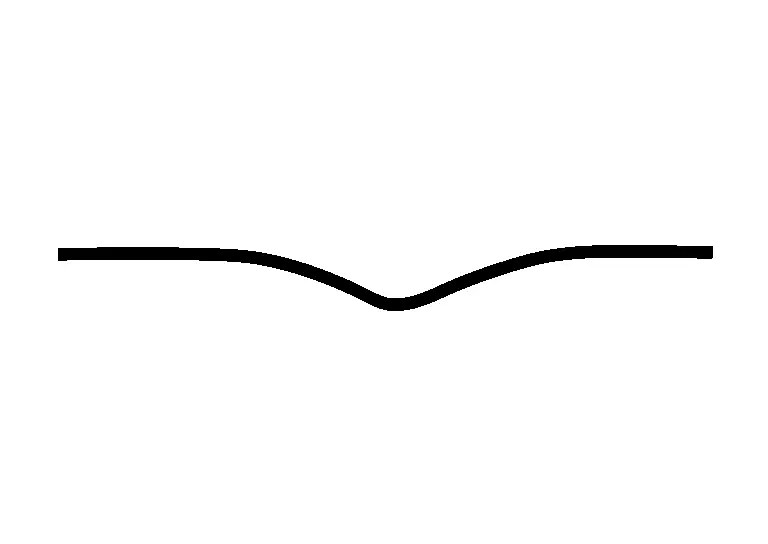
Most of the shallow dents have a low depth. They are also called elastic dents.
Sharp Dent
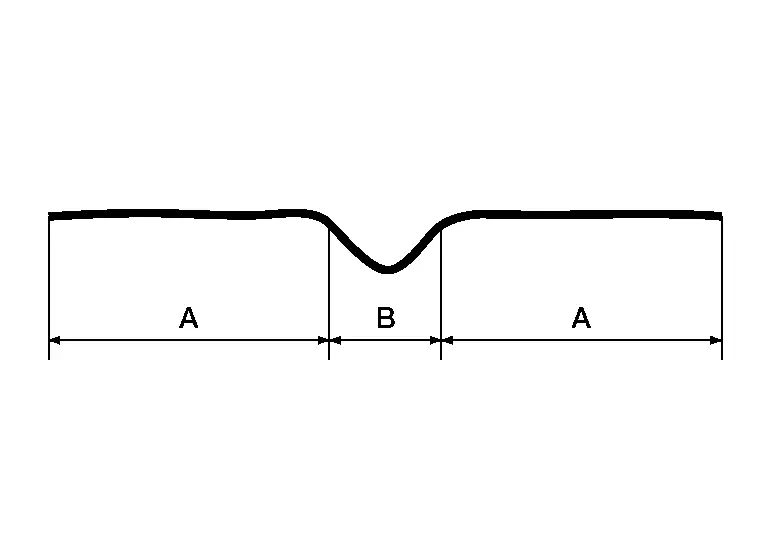
A sharp dent is made out of two parts: The Center (A), which is formed by the object which made the dent (stretched metal) and the second part of the dent (B), which is from the energy of the hit.
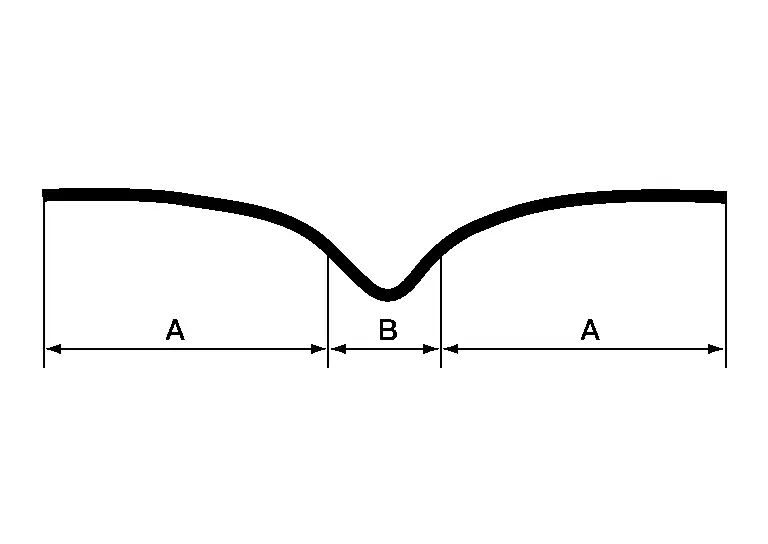
Energy of the hit
A: Primary Damage - Stretched center plastic deformation B: Secondary Damage - Energy of the hit elastic deformation
The outside part (A) of the dent is removed quickly. That is the easy part. To remove the center (B) is more difficult and needs more experience.
CAUTION:
This repair method should not be used on rails and reinforcements.
Plastic deformation forms at the center of portion (A) of the dent. The surrounding area remains in elastic deformation.
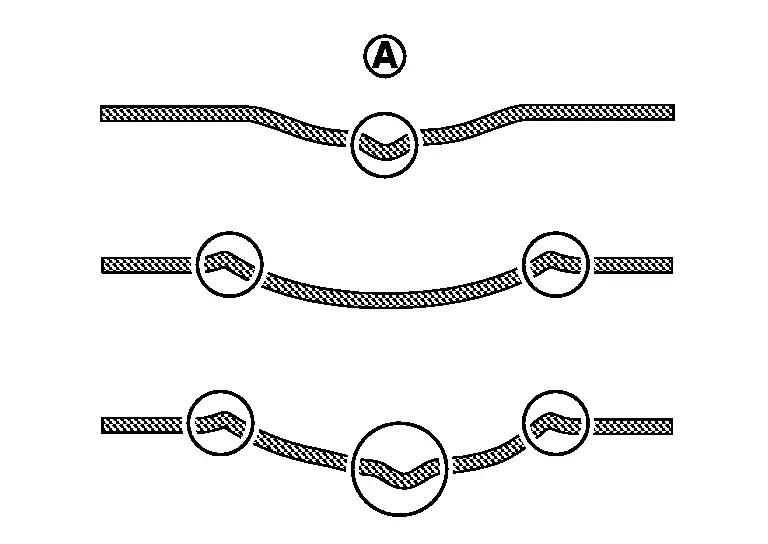
Plastic deformation occurs at one or several portions around the dent. Other areas remain in elastic deformation.
Both plastic and elastic deformation are generated throughout the damaged panel.
 Determining Panel Damage
CAUTION:
This repair method should not be used on rails and reinforcements.
Panel damage must be examined carefully to select the most suitable repair method.
(A) In the figure is the plastic deformed ...
 Examination of Panel Damage
CAUTION:
This repair method should not be used on rails and reinforcements.
It is difficult to find minor deformation or panel irregularity, particularly, at the final stage of repair. This section ex ...
Other materials:
Precautions for Body Repair
WARNING:
WARNING:
The repair information in this section is intended for trained body repair technicians who have attained a high level of skill and experience (e.g. ASE Collision Repair Certification, I-CAR Professional Development Program [PDP] training, etc.) in repairing collision damaged vehicl ...
Removal and Installation
WARNING:
REMOVAL
Remove tire. Refer to ROAD WHEEL TIRE : Removal & Installation.
When removing parking brake actuator harness and rear wheel sensor on the left side, remove the spare tire. Refer to Removal & Installation.
Disconnect parking brake actuator harness and rear wheel sensor harnes ...
Brake assist
Brake assist
The Brake Assist system in the Nissan Armada is designed to enhance braking performance
during emergency situations. When the system detects that the driver is applying
the brake pedal with significant force, it automatically increases braking pressure
beyond what a conventional ...

0.007