
Nissan Armada 2025-2026 Service and Repair Manual: Dollies
Dollies are used in combination with a hammer. They are a 1 kg - 2 kg (2 lb - 4 lb) steel blocks, heavier than a hammer, with various curves and planes.
(1) USE OF DOLLIES
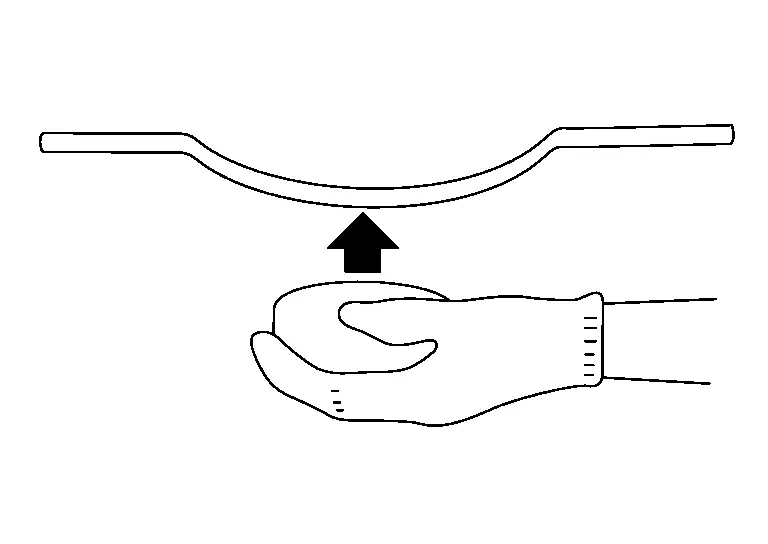
(a) Place the dolly on the underside of the deformed sheet metal.
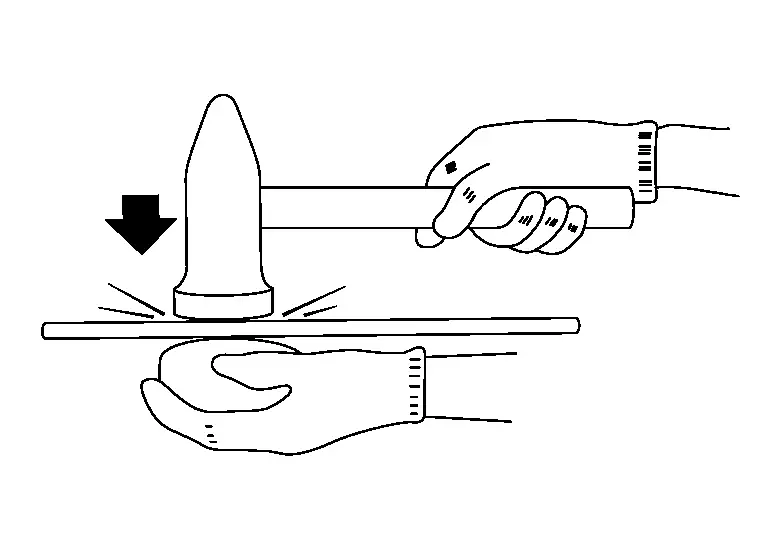
Strike the deformed section of the sheet metal with the hammer to stretch it.
(b) Move the hammer and dolly as necessary, and direct the hammer blows so as to bend the sheet metal.
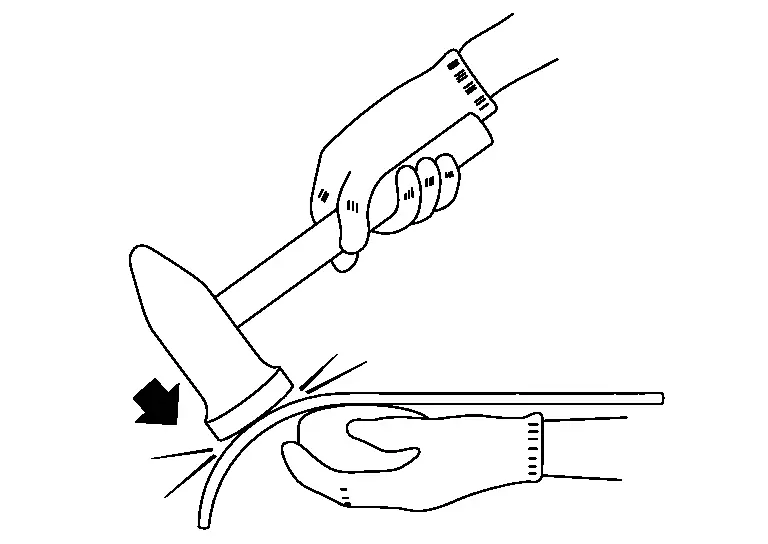
(c) If ordinary hammering is impossible due to limited space, substitute a dolly for the hammer, and strike the dented portion with the dolly.
(2) TYPES AND FEATURES OF DOLLIES
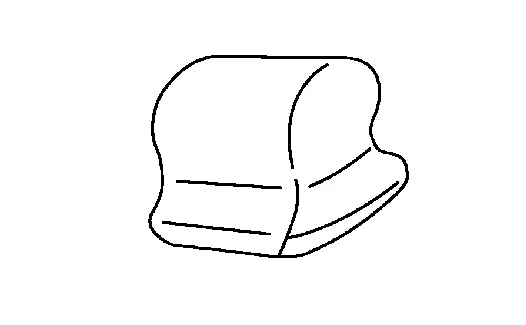
| General purpose dolly | This is also called a rail dolly. It has both wide and narrow curved faces. |
| Utility dolly | This type of dolly features various curved surfaces and has wide applicability to automobile body repair work. It can be handled easily in narrow spaces. |
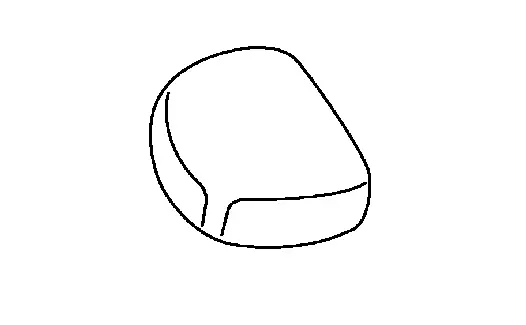
| Heel dolly | One side is flat and the other side is curved slightly. This is suitable for correcting flat and slightly curved surfaces. |
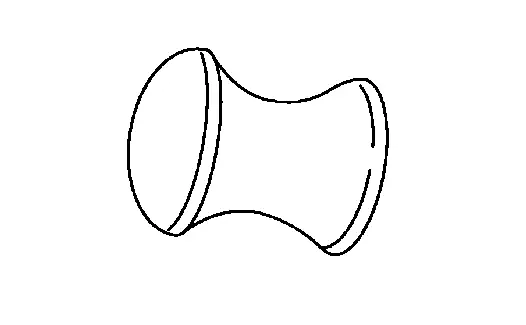
| Toe dolly | This dolly is formed by two flat surfaces and a connecting curved surface. It can be used in narrow places. |
| Round dolly | Both sides are curved. This dolly is used for repairing small dents. |
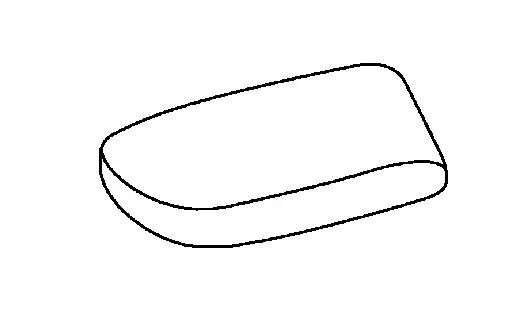
| Wedge dolly | This dolly has a curved surface which changes gradually from sharp to gentle. Its sharp end can be inserted into narrow portions. |
| Shrinking dolly | The surface is like a file. This dolly is used in combination with a shrinking hammer. |
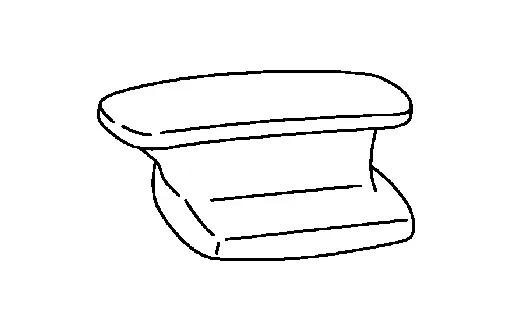
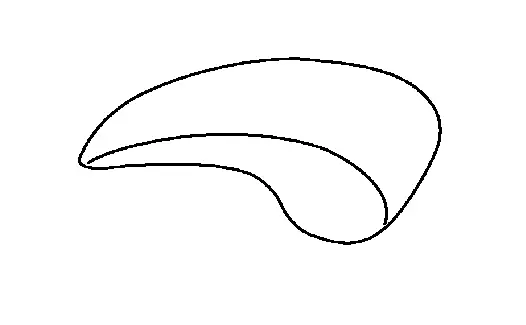
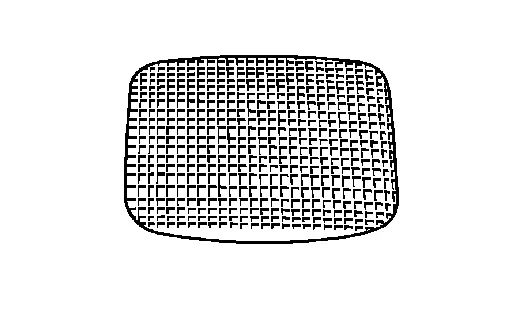
(3) SELECTION AND MAINTENANCE OF DOLLIES
Ideally, a dolly whose curved surface just fits the curvature of the panel should be used. However, this is often difficult. In most cases, a dolly whose curvature is slightly smaller than that of the panel should be selected.
Generally speaking, four types of dollies (general purpose, utility, heel and toe dollies) are sufficient for ordinary panel work. However a special dolly can be designed for unique shaping.
The size and weight of the dolly must be easy to handle.
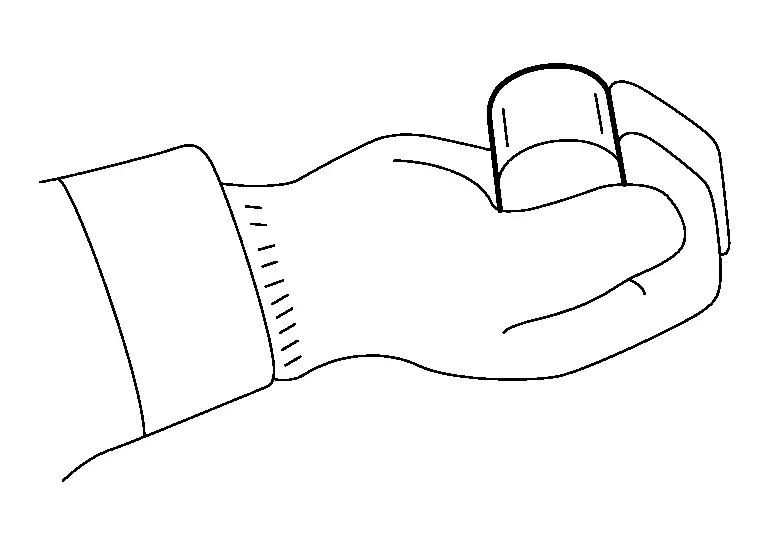
The maintenance procedures and cautions described for the hammer also apply to the dolly.
The entire surface of the dolly must be free from damage.
(4) HOW TO HOLD THE DOLLY
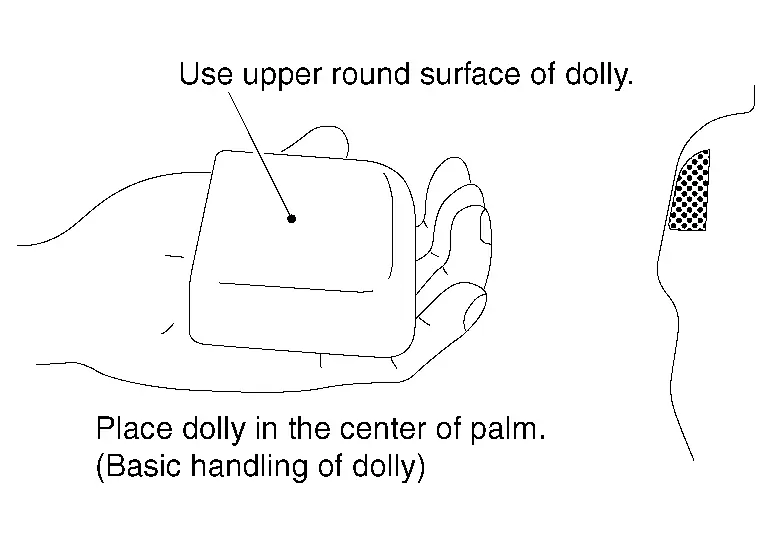
Basic handling of the dolly.
(a) TOP:
Place the dolly in the palm of your hand.
Holding it lightly, place the curved surface against the curved surface of the panel.
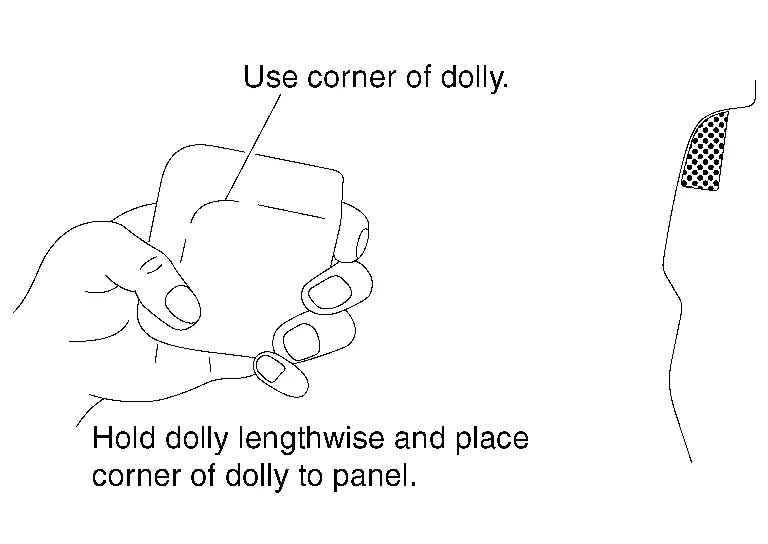
(b) CORNER:
Hold the dolly lengthwise, and place the corner in the sharply bent portion of the panel.
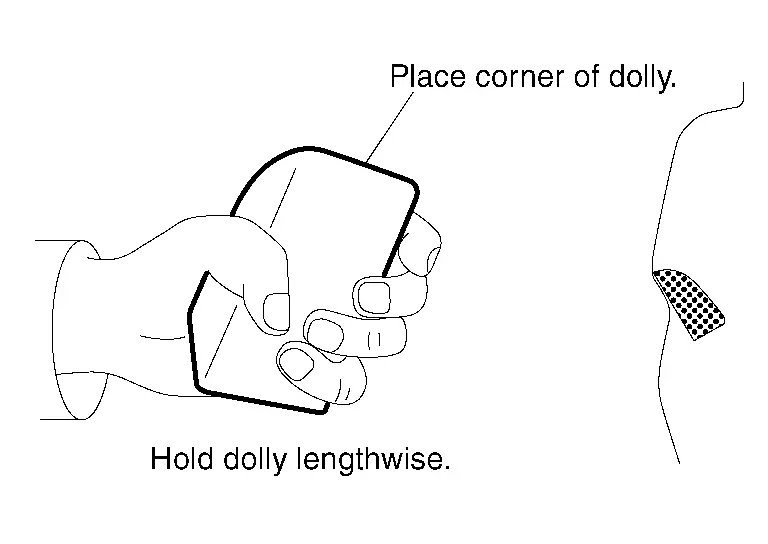
(c) EDGE:
Hold the dolly so that the edge faces upward.
Place this edge to the press line of the panel.
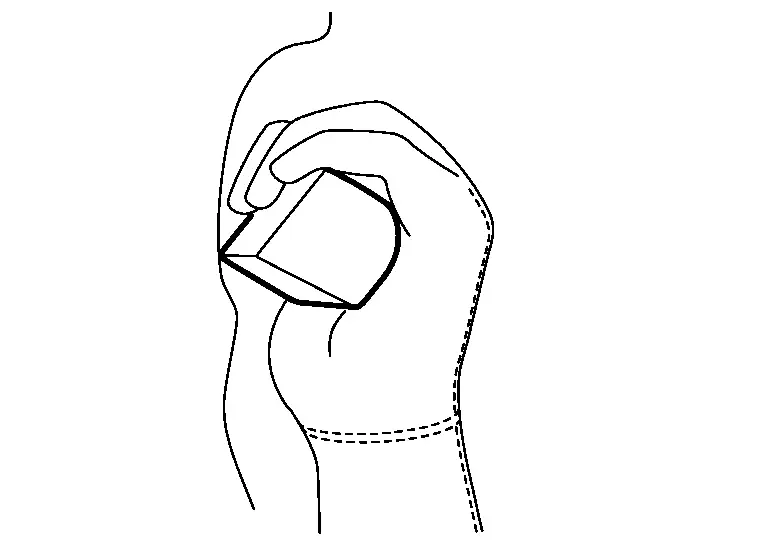
(d) CORRECTING THE PRESS LINE:
To correct a concave press line in a narrow space on the back of the panel, use a dolly as shown in the figure and strike the press line with it.
 Hammers
A hammer is used to correct dents, projections or other deformations. Various shapes have been designed according to their purposes.
(1) TYPES AND FEATURES OF HAMMERS
(2) SELECTION AND MAINTENANCE OF ...
 How to Use Hammer and Dolly
(1) HAMMER-ON-DOLLY
This is also known as dinging on the dolly. The dolly is held directly under the area being struck with the hammer. Hammering smoothes the dented metal between the dolly and hammer ...
Other materials:
Scribing Chisels
Chisels are generally used to cut sheet metal.
They are also used in body repair work. There are numerous types of chisels. This section, however, describes scribing chisels used exclusively for bending sheet metal or for shaping panel press lines.
This type of chisel must have a smoothly rounded ed ...
Removal and Installation
REMOVAL
Disengage hood lock control handle fixing pawl, and then remove hood lock control handle.
: Pawl
INSTALLATION
Note the following items, and then install in the reverse order of removal.
CAUTION:
After installation, perform hood lock control inspection. Refer to Inspection.
After installa ...
Removal and Installation
WARNING:
REMOVAL
Remove engine cover. Refer to Removal and Installation.
Remove air inlet tube (1 and 2). Refer to Removal & Installation.
Remove electric throttle control actuator as follows:Drain engine coolant from radiator or attach plug to prevent engine coolant leakage when engine coolant ...

0.0051