
Nissan Armada 2025-2026 Service and Repair Manual: Precaution for Brake System
WARNING:
Since dust covering the front and rear brakes has an affect on human body, the dust must be removed with a dust collector. Never splatter the dust with an air blow gun.
Recommended brake fluid. Refer to Fluids and Lubricants.
Never reuse drained brake fluid.
Never spill or splash brake fluid on painted surfaces. Brake fluid may seriously damage paint. Wipe it off immediately and wash with water if it gets on a painted surface.
Always confirm the specified tightening torque when installing the brake pipes.
After pressing the brake pedal more deeply or harder than normal driving, such as air bleeding, check each item of brake pedal.
Bleed the air using CONSULT. (Unable to bleed the air without using CONSULT) Refer to Work Procedure.
Always clean with new brake fluid when cleaning the master cylinder, brake caliper and other components.
Never use mineral oils such as gasoline or light oil to clean. They may damage rubber parts and cause improper operation.
Always loosen the brake tube flare nut with a flare nut wrench.
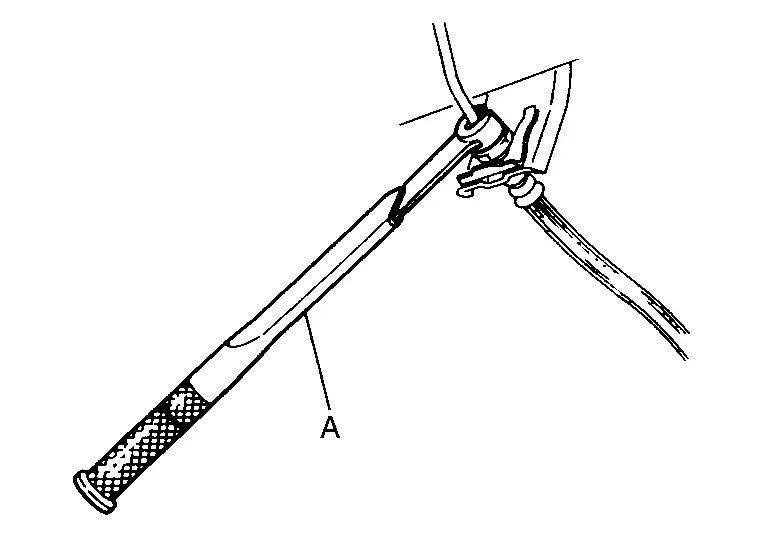
Tighten the brake tube flare nut to the specified torque with a flare nut torque wrench (A).
Turn the ignition switch OFF and disconnect the ABS actuator and electric unit (control unit) harness connector or the battery negative terminal before performing the work.
Check that no brake fluid leakage is present after replacing the parts.
Burnish the brake contact surfaces after refinishing or replacing rotors, after replacing pads, or if a soft pedal occurs at very low mileage.
Front brake pad: Refer to Inspection and Adjustment.
Front disc rotor: Refer to Inspection and Adjustment.
Rear brake pad: Refer to Inspection and Adjustment.
Rear disc rotor: Refer to Inspection and Adjustment.
Before removing the electrical brake control unit, reduce pressure of accumulator using the CONSULT. (Unable to reduce the pressure without using CONSULT) Refer to Work Procedure.
Turn the ignition switch OFF and disconnect CONSULT from data link connector. Get out of the vehicle, close all doors (including hood assembly), check that the room lamp is OFF, and wait for 2 minutes or more without opening these doors. Disconnect the electrical brake control unit harness connector, ABS actuator and electric unit (control unit), or the 12V battery negative terminal before performing the work.
CAUTION:
Never operate the vehicle.
After removing/installing or replacing chassis-related parts such as brake component parts, axle component parts, and suspension component parts, perform self-diagnosis after the work is completed. If a malfunction is detected, erase self-diagnosis results.
CAUTION:
To perform self-diagnosis, turn ignition switch OFF → ON → OFF → ON.
When operating the brake pedal or opening the driver side door, motor sound may be heard from electrical brake control unit. This is liquid pressure filling (pressure accumulation) sound and not a malfunction.
When the brake pedal is depressed when the ignition is not ON, the brake pedal will feel heavy and the stroke will be shorter. When the unfamiliar feeling disappears and the brake warning lamp is OFF after the brake pedal was depressed, then this is not a malfunction. When the brake warning lamp is ON, use CONSULT and perform the “ABS/BRAKE� self diagnosis.
During air bleeding between electrical brake control unit and each brake caliper, brake warning lamp and brake system warning lamp may turn on. When warning lamp turn on, erase the "self diagnosis result" using CONSULT and perform self diagnosis again. If any malfunction occurs, check the related DTC. Refer to DTC Index.
When malfunction occur to the power supply system of electrical brake control unit (no voltage supply), the brake warning lamp and brake system warning lamp turns on and warning buzzer sounds when the accumulator pressure decreases.
When any malfunction occurs with electrical brake control unit, VDC will control the brake.
Depending on vehicle condition (Auto ACC OFF etc.), when the brake pedal is depressed to start the engine, you may feel the pedal effort is changed and pedal may go down further than usual. This is normal and does not indicate a malfunction.
When a malfunction occurs in the 12V battery, the braking force is determined by the force pressing on the brake pedal (no boost operation). At the same time, the brake warning lamp and the brake system warning lamp turns ON.
When a malfunction occurs in the electrical brake control unit and the VDC function, the braking force is determined by the force pressing on the brake pedal (no boost operation). At the same time, the brake warning lamp and brake system warning lamp turn ON.
When the brake pedal operation feels abnormal or vibration occurs, perform self-diagnosis of “BRAKE�. Refer to DTC Index.
 Precaution for Supplemental Restraint System (SRS) "AIR BAG" and "SEAT BELT PRE-TENSIONER"
WARNING:
Always observe the following items for preventing accidental activation.
PRECAUTIONS WHEN USING POWER TOOLS (AIR OR ELECTRIC) AND HAMMERS
WARNING:
Always observe the following items for preve ...
 Precaution for when Jacking and Lifting Up the Vehicle with Electronic Air Suspension
System
Precaution for when Jacking and Lifting Up the Vehicle with Electronic Air Suspension
System
WARNING:
CAUTION:
OPERATION PROCEDURE
Jacking up or lift up using the following steps.
Start engine.
Turn OFF the electronic air suspension function. Refer to Operation.
Stop engine.
Jacking up or lif ...
Other materials:
Precautions for Removing Battery Terminal
NOTE:
NOTE:
NOTE:
The removal of 12V battery may cause a DTC detection error.
HOW TO DISCONNECT 12V BATTERY TERMINAL
Disconnect 12V battery terminal according to instruction described below.
Open the hood.
Turn ignition switch to the ON position.
Turn ignition switch to the OFF position with the d ...
Exploded View
Front door panel Front door outside molding Rear door outside molding Rear door panel : Pawl : Vehicle front ...
Removal and Installation
WARNING:
REMOVAL
Turn the ignition switch ON.
CAUTION:
Never start the engine.
Release the parking brake.
CAUTION:
If the brake cannot be released, release it manually. Refer to Diagnosis Procedure.
Turn the ignition switch OFF.
Disconnect 12V battery negative terminal. Refer to Removal and Instal ...

0.0056