
Nissan Armada 2025-2026 Service and Repair Manual: Handling of Welding Equipment
(1) STORAGE OF GAS CYLINDERS
In a well ventilated area, post a “No Fire� sign.
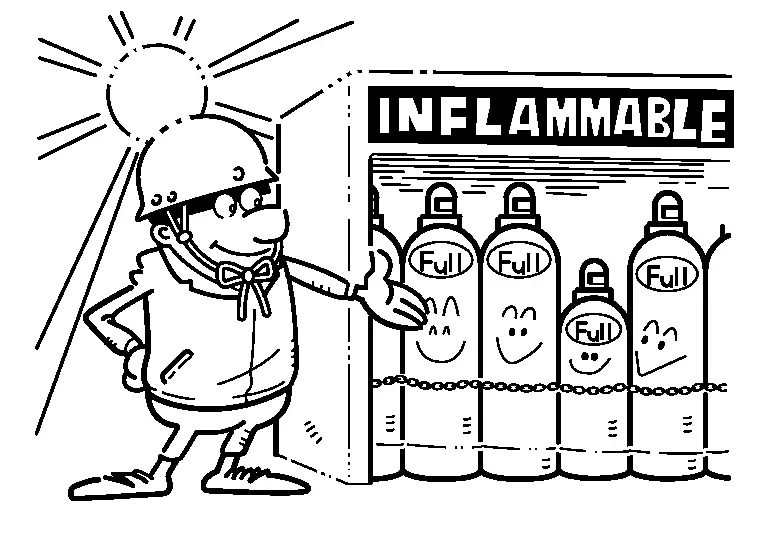
Avoid the direct rays of the sun. Maintain temperature below 40°C (104°F).
Inflammable gas cylinders and oxygen cylinders must not be stored in the same place.
Acetylene cylinders must be stored upright. Check that they cannot fall down.
(2) MOVEMENT AND TRANSPORTATION OF CYLINDERS
Be sure to properly close the valve and securely install the cap.
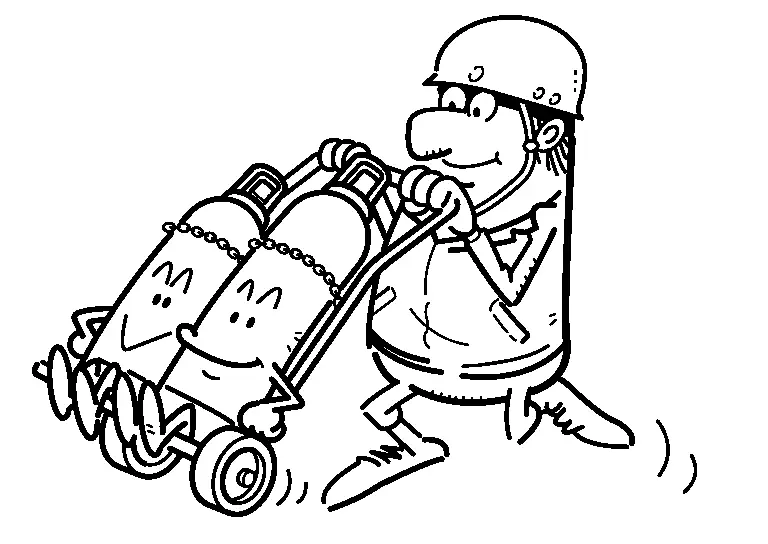
Do not drag or roll the cylinder.
Use a cylinder transportation cart.
When moving, tilt the cylinder slightly and roll it carefully on the bottom edge with one hand while supporting its cap with the other hand.
(3) USE OF CYLINDERS
The cylinder valve must be kept clean and free from oil.
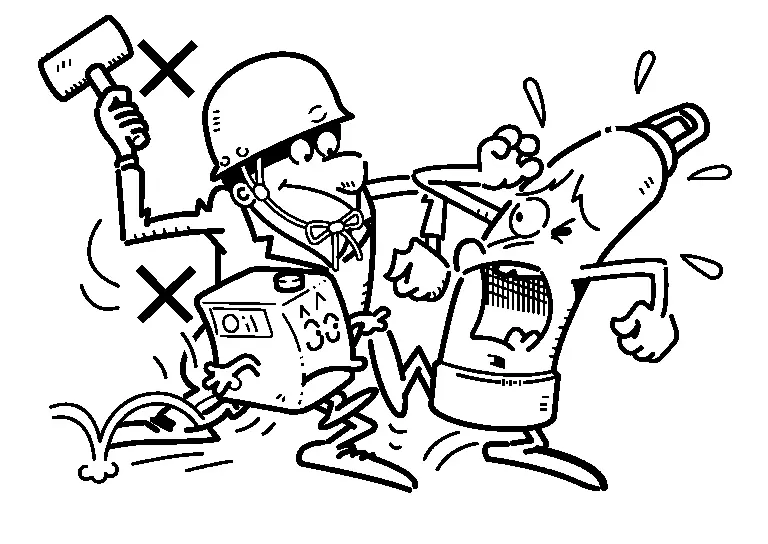
After opening the cylinder, leave the open-end wrench attached to the valve so it can be turned off quickly in an emergency.
When the cylinder is replaced, open the valve of the new cylinder slightly and remove dust from around the valve seat.
To check the cylinder for leakage, apply soapy water.
The valve should be fully open for oxygen and open 1.5 turns or so for acetylene.
To prevent the cylinder from falling down, ensure that it is properly secured.
And never give a shock to the cylinder.
(4) HANDLING OF THE PRESSURE REGULATOR
Always handle the pressure regulator with care and avoid impact.
Inspect the regulator periodically (at least once a year).
After use, purge the gas, and set the gauge to “0� (except the indoor type pressure regulator).
(5) HANDLING OF WATER-SEALED SAFETY DEVICES
This device must be installed vertically. Check the water level every morning.
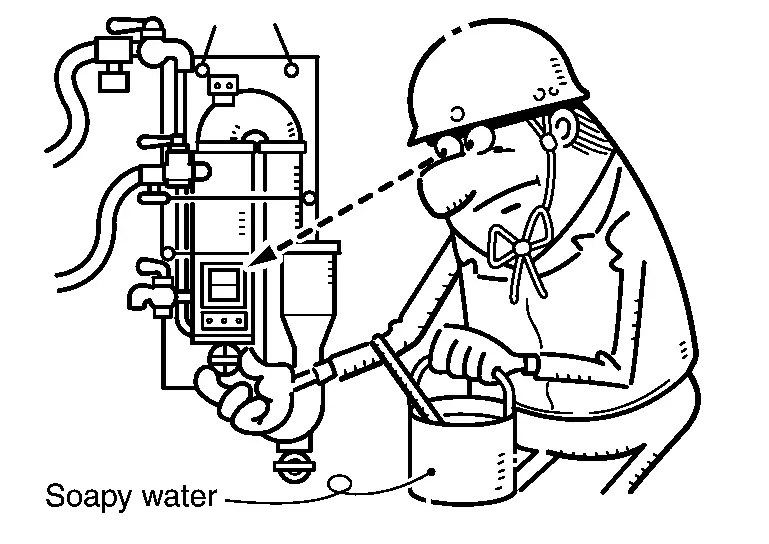
In case of freezing, antifreeze solution can be added.
(6) HANDLING OF HOSES
All hoses must be checked before use for flaws or leaks.
Never use the pipe coupling made of copper or 70% copper alloy for the acetylene hose.
Do not use compressed oxygen to clean the gas hose.
Do not use any hose that has experienced backfire.
(7) HANDLING OF THE TORCH
Keep the torch clean and free from oil.
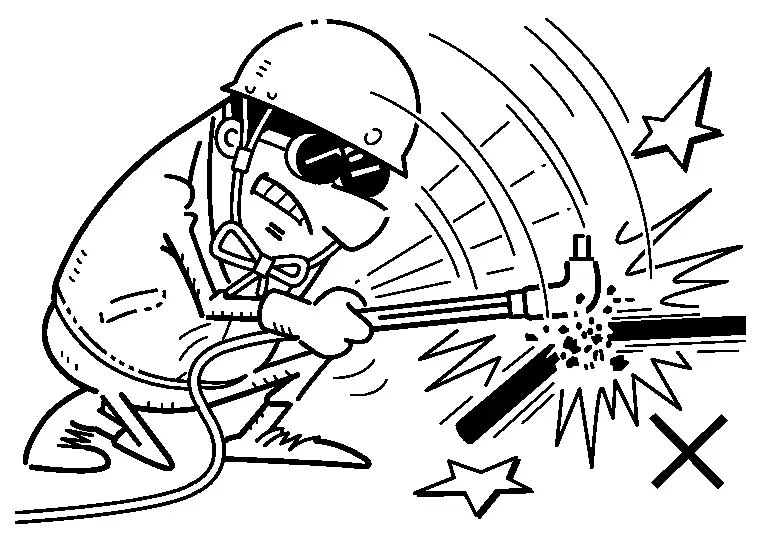
To replace the nozzle, use a special tool.
Do not use the torch as a hammer, etc..
Do not place it directly on the ground or on the floor.
Check suction of the torch at the end of the inflammable gas pipe coupling.
(8) DANGER OF ARC WELDING ELECTRICAL SHOCK
Keep cables and connections in good shape.
Do not place machine in a wet place. Do not stand in a wet place when welding.
Electrically ground welder. The vise clamp is not an electrical ground connection.
 Working Environment
Pay attention to ventilation and the health of workers.
Paint and sealant may generate poisonous gases when heated by fire. To prevent this, do not use a gas welder for cutting off damaged portions.
...

Other materials:
Work Procedure
If system detects that driver is not facing forward even though driver is facing forward, perform face recognition check.
PREPARATION BEFORE FACE RECOGNITION CHECK
Make sure that all of the following conditions are satisfied
Vehicle speed is 0 km/h (stopped).
Shift position is "P" range.
Put driver' ...
Adjustment
WARNING:
CAMBER, CASTER
Adjust with the front/rear side adjusting bolts on the lower link.
: Vehicle front
See the following table for the amount of cam bolt scale movement and the variation of camber and caster.
CAUTION:
Align the adjusting bolt cutout with the stamp of lower link bracket. ...
Seat belts with pretensioners (front and second row outboard seats)
WARNING
In the Nissan Armada, seat belt pretensioners are single-use safety devices.
Once activated, they must be replaced as a complete unit together with the seat
belt retractor and buckle to ensure continued protection.
If your Nissan Armada is involved in a collision and the pretensi ...

0.0066