This section describes the Supplemental Restraint System (SRS) in the Nissan Armada and provides essential safety information regarding its operation. The Nissan Armada is equipped with multiple advanced protection systems designed to work together with seat belts to reduce the risk of injury in various types of collisions.
The SRS in the Nissan Armada includes the following components:
- Driver and passenger supplemental front-impact air bags (NISSAN Advanced Air Bag System)
- Driver and front passenger supplemental knee air bags
- Front seat-mounted side-impact supplemental air bags
- Front central seat-mounted side-impact supplemental air bag (if equipped)
- Roof-mounted curtain side-impact and rollover supplemental air bags
- Seat belts with pretensioners
The supplemental front-impact air bag system in the Nissan Armada is designed to help reduce the impact forces acting on the head and chest of the driver and front passenger during certain frontal collisions.
The knee air bag system provides additional protection to the lower body by helping to absorb impact forces affecting the knees in specific crash scenarios.
The side-impact air bags installed in the Nissan Armada seats help protect the chest and pelvic area during side collisions. These air bags deploy on the side of impact to provide targeted protection.
The front central side-impact air bag (if equipped) adds another level of safety by helping to reduce contact between front occupants during side impacts, protecting the head area more effectively.
The curtain air bag system in the Nissan Armada extends along the roofline and provides head protection for occupants in both the front and rear outboard seating positions. In side impacts, these air bags deploy on the impacted side, while in rollover situations, they deploy on both sides and remain inflated briefly to offer extended protection.
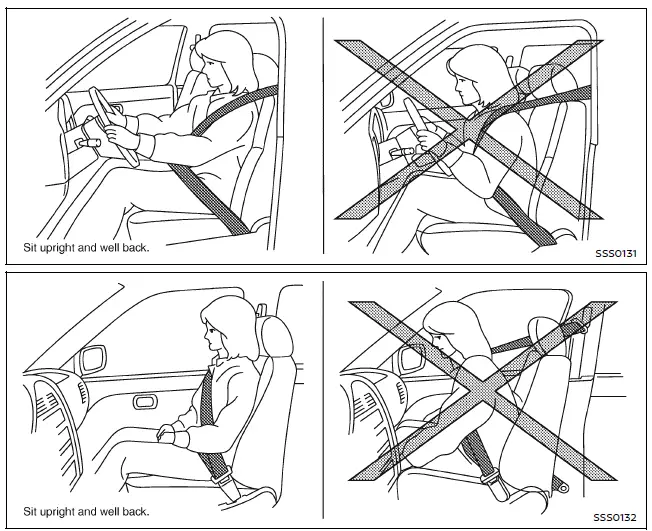
All supplemental systems in the Nissan Armada are designed to enhance, not replace, the protection provided by seat belts. Proper seat belt use and correct seating position are essential for maximum effectiveness. Always sit upright, maintain a safe distance from the steering wheel, dashboard, and doors, and ensure that seat belts are correctly fastened.
The air bag systems in the Nissan Armada operate only when the ignition switch is in the ON position.
When the ignition is turned ON, the supplemental air bag warning light illuminates briefly and then turns off after approximately 7 seconds if the system is functioning correctly.
WARNING
- The front air bags in the Nissan Armada generally do not deploy during side impacts, rear impacts, rollovers, or minor frontal collisions. Always wear seat belts to reduce the risk of injury in all types of accidents.
- The front passenger air bag and knee air bag will not deploy if the front passenger air bag status light is illuminated or if the seat is unoccupied.
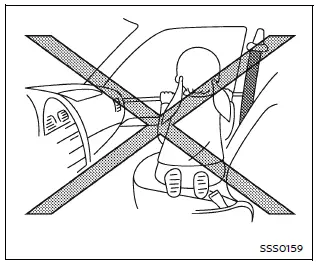
- The seat belts and air bag systems in the Nissan Armada are most effective when occupants are seated upright and positioned properly. Leaning forward, sitting sideways, or being out of position increases the risk of severe injury or death if the air bags deploy.
- The Advanced Air Bag System monitors seat belt usage and crash severity to determine deployment. Failure to wear seat belts correctly significantly increases injury risk.
- The front passenger seat in the Nissan Armada includes occupant classification
sensors that can disable the air bag system under certain conditions.
Improper seating posture or failure to use a seat belt may increase the risk of injury.
- Always keep your hands on the outer rim of the steering wheel. Placing hands inside the wheel increases the likelihood of injury if the air bag deploys.
WARNING
-
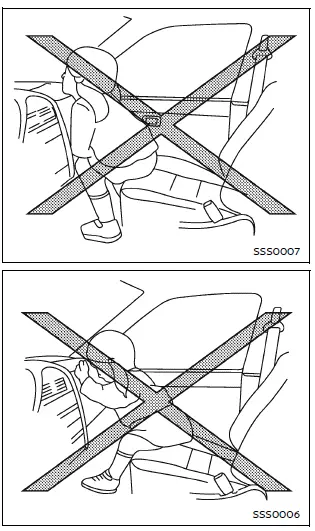
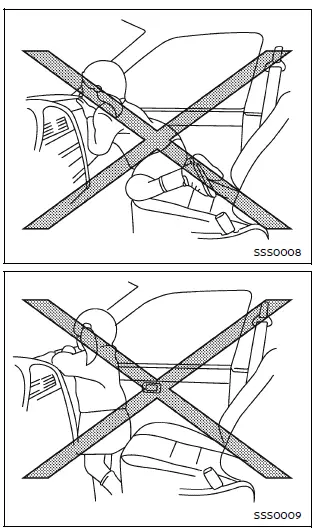
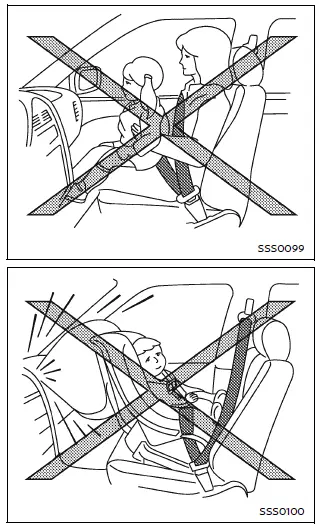
Never allow children to ride unrestrained or lean out of windows in the Nissan Armada. Holding a child in your arms is extremely dangerous, as the forces in a collision cannot be resisted by an adult.
-
Children must always be properly secured. Failure to do so may result in severe injury or death if air bags deploy. The rear seats in the Nissan Armada are the safest location for children whenever possible.
-
Never install a rear-facing child restraint in the front seat of the Nissan Armada. Deployment of the front air bag can cause serious injury or fatal consequences.
WARNING
Front seat-mounted central (if equipped), side-impact air bags, and roof-mounted curtain air bags:
- Side-impact air bags in the Nissan Armada typically do not deploy during frontal, rear, or minor side collisions. Always rely on seat belts as the primary restraint system.
- Curtain air bags usually do not deploy in frontal or rear impacts or minor side collisions. Proper seat belt use remains essential.
- The effectiveness of side and curtain air bags depends on proper seating position. Occupants should sit upright and avoid placing body parts near air bag deployment zones.
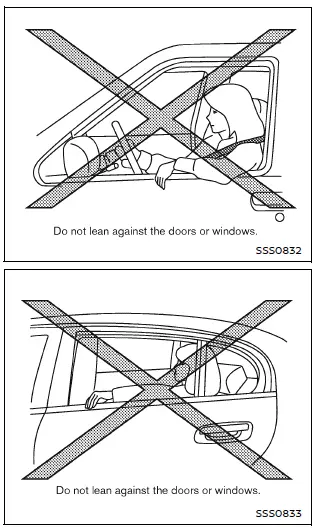
- Do not allow passengers to lean against doors or extend arms out of windows in the Nissan Armada, as this increases the risk of injury if side air bags deploy.
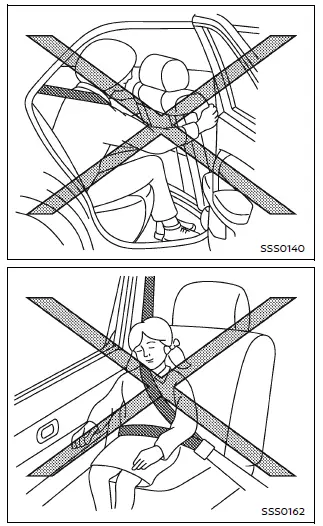
- Rear passengers should not hold onto the front seatbacks. In the event of air bag deployment, this may lead to serious injury. Children should always be properly restrained.
- Avoid using seat covers on front seats, as they may interfere with proper deployment of side air bags in the Nissan Armada.
The comprehensive Supplemental Restraint System in the Nissan Armada is designed to provide enhanced protection when used correctly alongside seat belts, ensuring a higher level of safety for all occupants.
Other materials
Unit Parameter Writing
Description
After working the following, transfer unit parameter must be written to transfer control unit.
Transfer control unit replacing
Transfer assembly replacing
Transfer control actuator replacing
Transfer range position sensor replacing
Transfer cam position sensor replacing
Transf ...
Low-Pressure Flexible Hose
Removal and Installation
REMOVALCAUTION:
Perform lubricant return operation before each refrigeration system disassembly. However, if a large amount of refrigerant or lubricant leak is detected, never perform lubricant return operation. Refer to Perform Lubricant Return Operation.
When disconnec ...
Luggage Floor Board
Removal and Installation
REMOVALCAUTION:
When removing, always use a remover tool that is made of plastic to prevent damage to the parts.Luggage Floor Rear Board Remove luggage floor box. Refer to Removal and Installation.
Remove belt bracket mounting bolt of luggage floor rear board, and then remo ...